
Sabarimala temple ban: SC refers case to Constitution Bench; verdict today
Article 14 of the Indian constitution guarantees right to equality
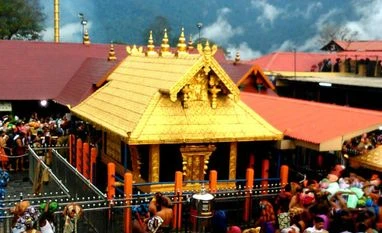 "Sabarimala temple ban: SC refers case to Constitution Bench; verdict today")
WebinarsNew
Deep DiveNew
Explore Business Standard
Article 14 of the Indian constitution guarantees right to equality
The Supreme Court on Friday referred to a Constitution Bench the question whether a ban on the entry of women in the age group 10-50 years in Kerala's Sabarimala temple on grounds of biological factors was discriminatory and violative of the Constitution's Articles 14, 15 and 17.
Article 14 guarantees right to equality, Article 15 prohibits discrimination on grounds of religion, race, caste, sex or place of birth, and Article 17 abolishes untouchability and forbids its practice.
A bench of Chief Justice Dipak Misra, Justice R. Banumathi and Justice Ashok Bhushan in its judgment framed five questions to be addressed by the Constitution Bench.
The questions include whether the exclusion of women in the age group of 10 to 50 years based on a biological factors amounts to "discrimination" and violates the very core of Articles 14, 15 and 17 and not protected by 'morality' as used in Articles 25 and 26 of the Constitution?
Asking whether the practice of excluding such women constitutes an "essential religious practice" under Article 25, the court in another question asked "whether a religious institution can assert a claim in that regard under the umbrella of right to manage its own affairs in the matters of religion?"
In another poser, the court has asked whether "Ayyappa Temple has a denominational character" and if it was permissible for religious denomination managed by a statutory board and is funded by the Kerala and Tamil Nadu governments to indulge in practices "violating the constitutional principles/morality embedded in Articles 14, 15(3), 39(a) and 51-A(e)a of the constitution".
In yet another question to be addressed by the Constitution Bench, the court has asked whether Rule 3 of Kerala Hindu Places of Public Worship (Authorisation of Entry) Rules permits 'religious denomination' to ban entry of women between the age of 10 to 50 years.
It further asked if its Rule 3 permitted the ban on the entry of women in the age group of 10 to 50 years in Sabrimala temple, then would it not be foul of Articles 14 and 15(3), which says that nothing in the provision prohibiting discrimination on grounds of religion, race, caste, sex or place of birth shall prevent the state "from making any special provision for women and children"
The Constitution Bench will also examine whether Rule 3(b) is ultra vires the Kerala Hindu Places of Public Worship (Authorisation of Entry) Act, 1965, and if not, is it violative of the fundamental rights.
The top court was hearing on a PIL by Indian Young Lawyers Association, which had sought direction to the Kerala government, the Travancore Devaswom Board, Chief Thanthri (priest) of Sabarimala Temple and the District Magistrate of Pathanamthitta to ensure entry of female devotees between the age group of 10 to 50 at the temple to Lord Ayappa which has been denied to them on the basis of certain customs and usage.
First Published: Oct 14 2017 | 1:24 PM IST


 Connect with us on WhatsApp