Antibodies produced by two-doses of mRNA vaccines against the original and early variants of the SARS-CoV-2 virus wane substantially over time, and offer essentially no protection against Omicron, according to a study that highlights the importance of a booster dose.
In a previous study, which is yet to be peer-reviewed, the same research team found that a third COVID-19 mRNA vaccine booster dose produced effective levels of neutralising antibodies against Omicron.
The mRNA vaccines such the Pfizer and Moderna preventives teach our cells how to make a protein that will trigger an immune response inside our bodies.
The new study, published in the journal Science Translational Medicine, examined antibodies in serum samples from 48 health care professionals with experimental versions of the parent virus and the Alpha, Beta, Delta and Omicron variants.
"Our new work shows that two doses of mRNA vaccine do not offer protection against Omicron, and even having a breakthrough infection on top of vaccine does not help much. But our earlier study showed that the booster can really rescue the shortcomings of the two doses," said Shan-Lu Liu, the senior author of both studies and a virology professor at Ohio State University, US.
"Serum samples were collected pre-vaccination, three to four weeks after a first vaccine dose, three to four weeks after a second vaccine dose and six months after the second vaccine," Liu said.
Neutralising antibodies that block viral particles' entry into host cells are considered the gold standard of protection against COVID-19 infection.
"There was a substantial increase in neutralising antibodies after the second dose against every variant except the Omicron variant," said first author of the study, John Evans, a Ph.D. student at Ohio State University.
"From the second dose to six months later, there was an at least five-fold drop in immunity, even against the parent virus," Evans said.
Twelve of the samples came from people suspected to have had a COVID-19 infection -- at time points ranging from before vaccination to after two vaccine doses -- based on a different kind of antibody testing.
Although the findings suggested a breakthrough COVID-19 infection on top of vaccination increased immunity against most versions of the virus, antibodies from only one individual with previous infection reached levels that could put up a reasonable fight against Omicron.
"Overall, nobody in this study had good immunity against Omicron," said Liu.
The experimental viruses were what are called pseudoviruses -- a non-infectious viral core decorated with different SARS-CoV-2 spike proteins on the surface structured to match known mutations in the variants studied.
The researchers used a special method to detect neutralising antibodies in the health professionals' blood samples to account for the varying levels of antibodies produced by individuals.
"Individuals did respond very differently to the first dose, and the same was true for the second dose," Liu said.
Results also showed that people who received the Pfizer mRNA vaccine produced about two-fold lower levels of neutralising antibodies than those who received the Moderna preventive.
Men also had significantly higher antibody levels compared to women against all variants over the post-vaccination time points, the researchers said.
Liu noted the dramatic reduction in immunity six months after two vaccine doses and the finding of the earlier study that a booster protects against Omicron highlight how important a third shot is to avoiding infection.
"After the second vaccine dose, the neutralising antibodies effective against Omicron dropped 23-fold, but with a booster shot, immunity dropped only three- to four-fold -- which is comparable to booster effectiveness previously reported against the Delta variant," he added.

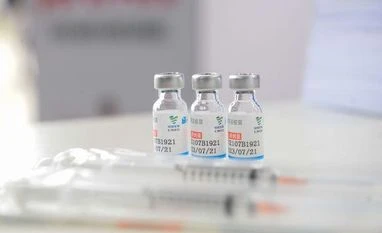 "'Vaccine-induced antibodies don't protect against Omicron, booster needed'")


 Connect with us on WhatsApp