This past summer, amidst fears that summer temperatures throughout the country might rise to an unheard of high of 45 degrees, the Japanese prime ministerial race proceeded on its conservative course.
For incumbent Abe Shinzo, the process was necessary to affirm the Liberal Democratic Party's loyalty. He needed to make sure that the allegiances of factions had not shifted as a result of the numerous scandals associated with his inner circle during his second term of office. But apparently, the Moritomo Gakuin scandal, in which the prime minister was believed to have secretly supported the building of an ultra-right-wing school in Osaka created to revive fanatical emperor worship and militaristic education, had lost its sting. And despite the polls and surveys showing that the public suspected the prime minister had compromised his principles in the Moritomo and other scandals, Abe won by a significant margin.
Climate change (kiko hendo) and global warming (ondanka) are familiar words in Japanese, of course, but the causes of temperature rise have not sufficiently been linked to unrestricted economic growth and corporate greed. Two decades ago, Japan presented itself as an eco-conscious nation by proposing the Kyoto Treaty, but as Abe and his neo-conservative clique took over the cabinet the party’s priorities once again shifted toward free trade and less restricted economic growth. Despite the LDP’s vision of “taking Japan back” (Nihon wo torimodosu) to its pre-bubble era level of economic ascendency, the gap between the rich and poor is becoming harder to ignore.
Choosing economic growth over the environment
From predictions that malaria and dengue fever will spread quickly once the temperature rises a few more degrees, to the even more devastating thought that the main island of Honshu will become uninhabitable unless the population is cloistered in perpetually air-conditioned buildings, perhaps the most common response in Japan is to maintain a stubborn reticence, or to shrug one’s shoulders and utter the hackneyed phrase shikataganai (there’s nothing to be done).
As in other European and North American countries, many citizens of Japan seem to think that the retired workaholic generation, known as the dankai sedai, achieved an astonishing economic miracle as they rebuilt a country left totally devastated by war. Left unexamined is the reality that this “miracle” resulted in promoting an excessive lifestyle of over-consumption that—as the global population increases ever more and as natural resources are depleted, corrupted or destroyed—is clearly unsustainable. One could speculate that the Japanese militarism of the early Showa period has simply been channeled into fanatical devotion to the principle of economic growth.

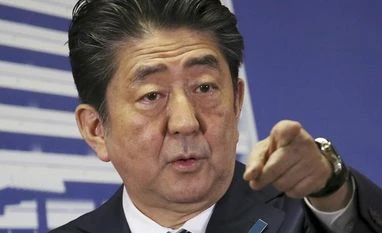 "Why Japan is mortgaging its future by choosing growth over environment")












 Connect with us on WhatsApp