
Australian institute offers technological help to prevent stubble burning
The project will kick off with a workshop hosted by the International Food Policy Research Institute in Chandigarh.
 "Australian institute offers technological help to prevent stubble burning")
WebinarsNew
Deep DiveNew
Explore Business Standard
The project will kick off with a workshop hosted by the International Food Policy Research Institute in Chandigarh.
With stubble burning in Punjab and Haryana causing environmental and health concerns, the Australian Centre for International Agricultural Research (Aciar) has offered technology to check the menace.
"Happy Seeder is a proven zero-tillage solution -- seeds can be planted directly into stubble without the need for land clearing or tilling -- eliminating the need to burn crop residues," a spokesman of the Australian High Commission said in a statement on Monday.
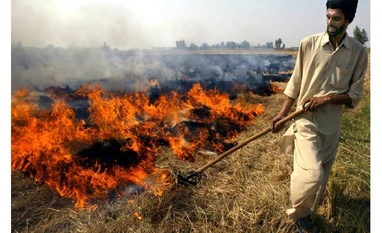
Each year, Punjab and Haryana generate an estimated 30 million tonnes of paddy straw, which is later set afire and is believed to be a major contributing factor to air pollution, especially over north India.
"A new project led by the Aciar could help address the ongoing environmental issues of stubble burning," the spokesman said.
Welcoming the initiative, Australian High Commissioner to India, Harinder Sidhu, said: "Aciar investment to develop the Happy Seeder has been an outstanding success.
"Through this new project, we can work collaboratively with Indian partners to not only ensure better productivity and soil health, but also address the issue of stubble burning."
The project will kick off with a workshop hosted by the International Food Policy Research Institute in Chandigarh.
The workshop will bring together officials from the central government and states of Punjab and Haryana, including research scientists, extension officials, farmers and manufacturers of machinery to discuss ways to promote adoption of the Happy Seeder technology.
Titled "Value chain and policy interventions to accelerate adoption of Happy Seeder zero-tillage in rice-wheat farming systems across the Gangetic Plains", the project aims to highlight the performance of the Happy Seeder.
"An excellent example of practical cooperation between Australia and India, it was developed by the Punjab Agricultural University (PAU) and Australian engineers and scientists with support from Aciar a decade ago," the spokesman added.
Aciar will work with the Centre for Global Food and Resources at the University of Adelaide and Indian partners from government and the agribusiness sector to deliver the project, the statement said.
First Published: Dec 18 2017 | 3:04 PM IST

