Good monsoon has led to more acreage under cultivation: Agri ministry

The area planted with rice, the main food crop of the world's second-most populous country, was 26.7 million hectares, compared with 22.4 million hectares in the year-earlier period

Rural economy, agriculture, farming, tractors
Corn acreage was at 7.4 million hectares versus 7.2 million hectares in the previous year.
Mayank Bhardwaj | Reuters New Delhi
2 min read Last Updated : Aug 01 2020 | 7:55 PM IST

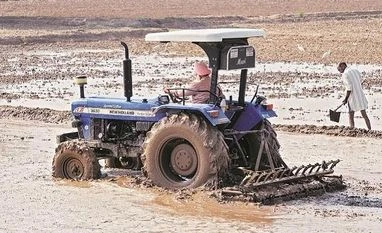
A rapid progress of the monsoon helped Indian farmers plant nearly 14% more land than last year with rice, corn, cane, cotton and soybean crops, according to the farm ministry.

Farmers planted more acreage of every single summer-sown crops between June 1 and July 31 than last year, brightening the prospects for a bumper output in the world's leading producer of farm commodities.

The area planted with rice, the main food crop of the world's second-most populous country, was 26.7 million hectares, compared with 22.4 million hectares in the year-earlier period.

Oilseeds planting was at 17.5 million hectares, compared with 15 million hectares. Sowing of soybeans, the main summer oilseed crop, stood at 11.7 million hectares, compared with 10.8 million hectares. Soybean output is set to jump by at least 15%

Sugar cane planting was marginally higher at 5.2 million hectares.

Planting of the protein-rich pulse, a staple in the Indian diet, was at 11.2 million hectares, higher than 9.4 million hectares last year.

Corn acreage was at 7.4 million hectares versus 7.2 million hectares in the previous year.

The area planted with cotton totalled 12.1 million hectares against 10.9 million hectares.

The monsoon covered the entire country nearly two weeks earlier than usual, helping farmers speed up planting.

Monsoon rains are critical for farm output and economic growth as about 55% of India's arable land is rain-fed.

The weather office on Friday said monsoon rains are expected to be 104% of the average in August and September.

The India Meteorological Department defines average, or normal, rainfall as between 96% and 104% of a 50-year average of 88 cm for the entire four-month season.

One subscription. Two world-class reads.

Already subscribed? Log in

Subscribe to read the full story →
*Subscribe to Business Standard digital and get complimentary access to The New York Times

Smart Quarterly

₹900

3 Months

₹300/Month

SAVE 25%

Smart Essential

₹2,700

1 Year

₹225/Month

SAVE 46%
*Complimentary New York Times access for the 2nd year will be given after 12 months

Super Saver

₹3,900

2 Years

₹162/Month

Subscribe

Renews automatically, cancel anytime

Here’s what’s included in our digital subscription plans

Exclusive premium stories online

  • Over 30 premium stories daily, handpicked by our editors

Complimentary Access to The New York Times

  • News, Games, Cooking, Audio, Wirecutter & The Athletic

Business Standard Epaper

  • Digital replica of our daily newspaper — with options to read, save, and share

Curated Newsletters

  • Insights on markets, finance, politics, tech, and more delivered to your inbox

Market Analysis & Investment Insights

  • In-depth market analysis & insights with access to The Smart Investor

Archives

  • Repository of articles and publications dating back to 1997

Ad-free Reading

  • Uninterrupted reading experience with no advertisements

Seamless Access Across All Devices

  • Access Business Standard across devices — mobile, tablet, or PC, via web or app

Topics :Indian monsoonfarmersRICESugar oilseedspulsesIndian Meteorological Department

Next Story




