


Record-breaking winter grips Delhi-NCR as cold wave spreads across India
Widespread cold wave and fog continue to disrupt life across northern and eastern India, while fresh snowfall is likely in the western Himalayas
 "Winter, Cold, Delhi Cold")
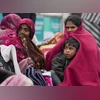
This winter has thrown up a striking anomaly, the plains are colder than the hills (Photo: PTI)
Listen to This Article
North India continues to reel under harsh winter conditions, with Delhi-NCR witnessing one of its coldest phases in recent years. Minimum temperatures have stayed well below seasonal averages, intensifying the chill across the region.
Delhi-NCR sees record-breaking winter
Delhi remained firmly under the grip of an intense cold wave on Tuesday, with the city recording some of its lowest temperatures of the season. According to the India Meteorological Department (IMD), the average minimum temperature dropped to 4 degrees Celsius, while Safdarjung and Lodhi Road recorded lows of around 3 degrees Celsius.
#WATCH | Delhi: A cold wave continues in several parts of the national capital. Homeless people are taking refuge in rain shelters to escape the cold. Visuals from Bangla Sahib Night Shelter Home. pic.twitter.com/QaZP3r1LCz
— ANI (@ANI) January 13, 2026
Conditions were even colder earlier in the week. On Monday, Ayanagar emerged as the coldest locality in the capital at 2.9 degrees Celsius, while several parts of Delhi experienced cold wave conditions on Sunday night, with minimum temperatures plunging close to the three-degree mark. Despite mainly clear skies during the day, shallow to moderate fog during morning hours continues to affect visibility and disrupt travel across the region. Gurgaon recorded a historic low of 0.6 degrees Celsius, its coldest temperature in nearly 90 years, as an intense cold wave swept the region, according to data from the India Meteorological Department (IMD), underscoring the severity of this winter spell across Delhi-NCR.
Also Read

 "Delhi Winter, Cold, Winter")
 "US President Donald Trump")
 "Loan, Home Loan, Money")
 "justice, court")
 "Tata Elxsi")
Fog and cold wave dominate the plains
Cold wave to severe cold wave conditions are very likely at isolated places over Punjab, Haryana, Chandigarh, Rajasthan and western Uttar Pradesh, while dense to very dense fog continues to blanket parts of the Indo-Gangetic plains. Visibility levels have dropped significantly during early morning hours, impacting road, rail and air operations.
Cold day conditions and ground frost are also likely at isolated places over Uttarakhand, posing risks to agriculture and horticulture.
Why are plains colder than hills?
This winter has thrown up a striking anomaly, the plains are colder than the hills. Several cities across north India’s plains recorded near-freezing temperatures, with Amritsar at 1.1 degrees Celsius, Churu at 1.3 degrees Celsius, Hisar at 2.6 degrees Celsius, Karnal at 3.5 degrees Celsius and Meerut at 4.5 degrees Celsius.
In contrast, hill stations reported comparatively milder nights, with Mussoorie at 7.7 degrees Celsius and Shimla at 8.8 degrees Celsius.
Meteorologists attribute this to cloud cover over the higher reaches caused by an active western disturbance, which prevented heat from escaping during the night. Over the plains, however, clear skies combined with persistent cold north-westerly winds led to strong radiative cooling, allowing temperatures to drop sharply after sunset.
Snowfall in Himalayan regions
The western Himalayan region, including Jammu and Kashmir, Ladakh, Himachal Pradesh and Uttarakhand, is expected to witness rain and snowfall, particularly at higher altitudes. Sub-zero temperatures persist in many areas, with fresh snow likely to further hamper mobility in mountain districts.
South India to get rainfall
Southern India presents a contrasting picture, with light to moderate rainfall and thunderstorms forecast over parts of Tamil Nadu, Puducherry and coastal Andhra Pradesh. Additionally, squally weather with winds reaching 35–45 kmph, gusting up to 55 kmph, is likely over parts of the Comorin area.
More From This Section
 "Makar Sankranti")
 "Friedrich Merz")

 "Dogs, Stray dogs, Street Dogs, Dog")
 "Lalu Prasad Yadav, Lalu Prasad, Lalu")
Topics : cold wave Delhi-NCR Delhi weather IMD weather forecast weather forecast snowfall BS Web Reports
Don't miss the most important news and views of the day. Get them on our Telegram channel
First Published: Jan 14 2026 | 6:44 AM IST