BS BFSI Summit: Economy may grow at 10.5% or more in FY22, says Rajiv Kumar

Full-fledged private investment recovery expected by Q2FY23, he says
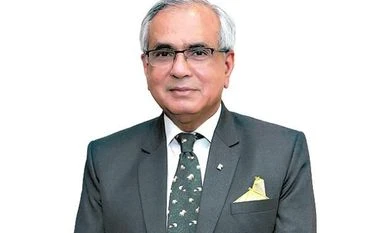
Rajiv Kumar
NITI Aayog Vice-Chairman Rajiv Kumar
BS Reporter New Delhi
3 min read Last Updated : Oct 19 2021 | 11:55 PM IST
The Indian economy will register a growth rate of at least 10.5 per cent this fiscal year against the consensus of 9.5 per cent, NITI Aayog Vice-Chairman Rajiv Kumar said on Tuesday while delivering the keynote address at Business Standard’s BFSI Insight Summit.

He expected economic growth to be 8 per cent on a sustained basis from FY23.

He said the economy was on a W-shaped recovery (“double dip”, meaning the economy picks up, falls again, and starts rising). “We are in the last leg of the W, and it will be more sustained ... All the high frequency indicators show the economy is strengthening. Even contact-sen sitive sectors like hotels are moving up. The momentum is to continue till March 2022. So, we need to focus more after March 2022,” he said.

Indicating the possibility of a strong rebound, the Reserve Bank of India has estimated economic growth at 9.5 per cent this fiscal year.


On private investment, Kumar said it would not pick up immediately. To increase private capex, Kumar suggested: “Banks shouldn’t just focus on triple A ratings. They should restart public-private partnerships rigorously; a conscious effort should be made to build trust between the private sector and the government, besides removing the anomalies in regulatory compliances.” 


“We should expect full-fledged private investment recovery by the second quarter of the next (fiscal) year”.

Kumar said several reforms done in the past 24 months, including asset monetisation and the production-linked scheme, would trigger private investment. 

Talking about downside risks, Kumar cautioned about the global growth rate, which has started to moderate.

“We don’t know where we are headed with rising commodity prices, including energy, and that’s a risk. The foreign chip shortage is bothering us,” he said, adding that the crux of “this Covid emergency period has been the busiest reform period in our country”.


Talking about the implementation of government schemes, he said the NITI Aayog, along with the expenditure department, had evaluated 360 schemes to allocate funds to these based on the outcome of the performance.

“I have received three letters in the last fortnight from state governments, saying that they want to strengthen their own monitoring and evaluation officers,” he said. 

Kumar said consumer confidence had been rising, especially that of the upper and middle classes.

One subscription. Two world-class reads.

Already subscribed? Log in

Subscribe to read the full story →
*Subscribe to Business Standard digital and get complimentary access to The New York Times

Smart Quarterly

₹900

3 Months

₹300/Month

SAVE 25%

Smart Essential

₹2,700

1 Year

₹225/Month

SAVE 46%
*Complimentary New York Times access for the 2nd year will be given after 12 months

Super Saver

₹3,900

2 Years

₹162/Month

Subscribe

Renews automatically, cancel anytime

Here’s what’s included in our digital subscription plans

Exclusive premium stories online

  • Over 30 premium stories daily, handpicked by our editors

Complimentary Access to The New York Times

  • News, Games, Cooking, Audio, Wirecutter & The Athletic

Business Standard Epaper

  • Digital replica of our daily newspaper — with options to read, save, and share

Curated Newsletters

  • Insights on markets, finance, politics, tech, and more delivered to your inbox

Market Analysis & Investment Insights

  • In-depth market analysis & insights with access to The Smart Investor

Archives

  • Repository of articles and publications dating back to 1997

Ad-free Reading

  • Uninterrupted reading experience with no advertisements

Seamless Access Across All Devices

  • Access Business Standard across devices — mobile, tablet, or PC, via web or app

Topics :Indian Economyprivate investment BFSINiti AayogRajiv Kumar NITI Aayog

Next Story



