China slowdown adversely affected India, says Rajan
In his interview Rajan also pointed to "growing interdependence" between India and China
Press Trust Of India Beijing China's pain of economic slowdown is India's pain too, RBI Governor Raghuram Rajan said contradicting government assertions that India will not be affected by deceleration of Chinese economy.
"The Chinese slowdown is a concern for the whole world. There is a lower demand for some of our exports to China. But indirectly too, many of the countries are not exporting to China as much as they did and they are buying less from us," Rajan said in an interview with Hong Kong-based South China Morning Post.
"But India being a commodity importer, has been helped a bit by cheaper commodities. So the impact has not been as bad as it could have been. Still, on the whole, we have been adversely affected by the Chinese slowdown because China's slowdown has impacted global growth and India is very well integrated into the global economy", Rajan said. Finance Minister Arun Jaitley had told a gathering at Columbia University last month that India is "not impacted" by the slowdown as it is not part of Chinese supply chain and India could become the "additional shoulder" the global economy needs to stand on as China slows. Some comments from India that China's pain is India's gain has drawn strong reactions from the Chinese media.
Rajan was in Hong Kong on Friday to receive honourary doctorate awarded by the Hong University of Science and Technology.
In his interview Rajan also pointed to "growing interdependence" between India and China. "The prime minister has clearly laid out a path for improving relations with neighbours. The focus is on the East, rather than the traditional emphasis on the West. Whether it is through the Asian Infrastructure Investment Bank or through China's Silk Road initiative, we will have greater engagement with China and Chinese projects. This will also feed well into China's interests in expanding its engagement in the region," he said.
Rajan said he hopes India will emulate China's growth rates and the country would like to learn from things China got right. "We would like to learn from its manufacturing success, how it built up its infrastructure, how it encouraged its village enterprises and how it manages FDIs in such enormous quantities. A lot of Indian businesspeople who travel to China also keep coming back with stories of why it works better than India", he said.
"But I also stress we cannot blindly follow the path that China followed as it has already been on that path and has changed some of the conditions. We have to determine which path we follow so that there is room for both of us. Would it, for example, make sense for India to specialise in industries that China has already specialised in? In some cases there is room for both, in some maybe not," he said.

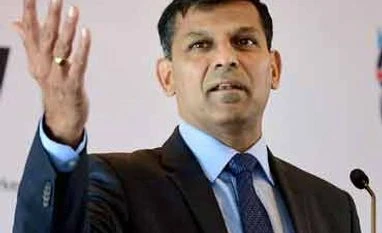 "China slowdown adversely affected India, says Rajan")


 Connect with us on WhatsApp