Japan has offered to finance India’s first bullet train, estimated to cost $15 billion, at an interest rate of less than a per cent, officials said, stealing a march on China, bidding for other projects on the world’s fourth-largest network.
Tokyo was picked to assess the feasibility of building the 505-kilometre corridor linking Mumbai with Ahmedabad and concluded it would be technically and financially viable.
The project to build and supply the route will be put out to tender, but offering finance makes Japan the clear frontrunner.
Last month, China won the contract to assess the feasibility of a high-speed train between Delhi and Mumbai, a 1,200-km route estimated to cost twice as much. No loan has yet been offered.
Japan’s decision to give virtually free finance for Modi’s pet programme is part of its broader push back against China’s involvement in infrastructure development in South Asia over the past several years.
“There are several (players) offering the high-speed technology. But technology and funding together, we only have one offer. That is the Japanese,” said A K Mital, the chairman of the Indian Railway Board, which manages the network.
The two projects are part of a ‘Diamond Qaudrilateral’ of high-speed trains over 10,000 km of track that India wants to set up connecting Delhi, Mumbai, Chennai and Kolkata.
Japan has offered to meet 80 per cent of the Mumbai-Ahmedabad project cost, on condition that India buys 30 per cent of equipment, including the coaches and locomotives from Japanese firms, officials said.
Japan’s International Cooperation Agency (JICA), which led the feasibility survey, said the journey time between Mumbai and Ahmedabad would be cut to two hours from seven. The route will require 11 new tunnels, including one undersea near Mumbai.
“What complicates the process is Japanese linking funding to use of their technology. There must be tech transfer,” said Mital.
JICA declined to comment on the details of its offer. “The report has already been handed over to India, and the government is now in the process of making a consideration,” a spokesperson said.
Toshihiro Yamakoshi, counsellor in the economic section of the Japanese embassy, said Japanese companies were keen to collaborate with their Indian counterparts on the rail project as part of Modi’s ‘Make in India’ programme. He said it was too early to provide details of the cooperation.
Tokyo’s push in India comes just weeks after it lost out to China on the contract to build Indonesia’s first fast-train link.
Beijing offered $5 billion in loans without asking for guarantees, an Indonesian official said, ending a months-long battle to build the line linking Jakarta with the textile hub of Bandung.
Japan's NHK broadcaster quoted Transport Minister Keiichi Ishii as saying that Prime Minister Shinzo Abe had instructed him to step up exports of transport systems to India and Southeast Asia.
"It is very regrettable that a high-speed railway project in Indonesia was awarded to China," he said.
China won the Delhi-Mumbai survey after securing clearance from Indian security agencies long worried about China's involvement in Indian infrastructure.
The two neighbours fought a war in 1962 over a border dispute that remains unresolved, though trade between them is booming.
India's cabinet will take a decision on the Japanese proposal over the next few weeks, an Indian railway official said. He said there were lingering concerns about whether the billions of dollars required for high-speed rail might be more usefully spent in modernising the railway system.
"There is a lot of money involved in this. The different departments are weighing the implications. Should we be committing all our resources to a single high-speed line," the railway official said on condition of anonymity."
"The railways have not attempted anything as big as this before in terms of costs," the official said.
India's rickety state-controlled rail system, which moves 23 million people a day, has a poor safety record and is in desperate need of funds to modernise it.
The average speed of trains is 54km/hour, and rail experts have argued that the priority ought to be to improve the speed and safety on existing trains and routes.

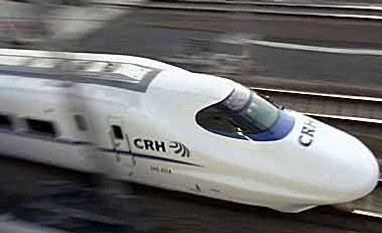 "Japan offers India $15-bn for bullet train project")


 Connect with us on WhatsApp