
Localised lockdowns already hitting economic activities: Report
Power consumption and e-way GST bill collections are already down
 "Localised lockdowns already hitting economic activities: Report")
WebinarsNew
Deep DiveNew
Explore Business Standard
Power consumption and e-way GST bill collections are already down
With the pandemic caseload remaining over 2.5 lakh for the second day, a report has warned of the grim economic scenario as with even limited restrictions on people's movement and some businesses, power consumption and e-way GST bill collections are already down.
The report has also called for speeding up the vaccination drive that of late has been on the decline on a weekly basis.
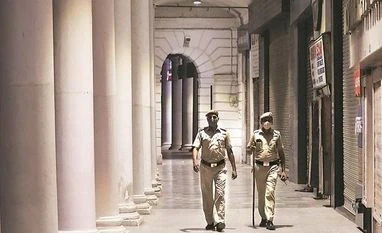
With cases spreading very fast, more and more states are clamping down more localised restrictions on people movement and commerce, falling just short of a complete lockdown. This already has electricity consumption and GST e-way bills collection, which are used as proxies to track economic activity, softening somewhat and it needs to be seen whether this softening is a blip, or marks a shift in a trend, Crisil said in a note on Tuesday.
What proves to be a saving grace is that manufacturing and construction activities are operating, and travel and recreation services are also allowed in most states with social distancing measures.
But a greater concern is the stuttering pace of vaccinations as the number of people vaccinated per million daily was lower at 2,408 for the week to April 18 compared to 2,554 in the week to April 11.
As a result as of April 18, only 16.4 per cent of population in 45-65 age-group is vaccinated, and those in the 65 and above age bracket, as much as 33.1 per cent are inoculated, said the report.
The impact of these restrictions, though, is beginning to affect retail mobility, which dipped across more states, with the highest drop in Maharashtra at 17.7 percentage points decline between March and April 18 on average.
The second wave of the pandemic continues to spread fast, crossing the grim benchmark of 2 lakh daily infections in the week of April 12-18 giving the country the unenviable distinction of having the highest number of daily cases in the world, surpassing Brazil.
Maharashtra, which for long has been the fountainhead in terms of coronavirus cases, has of late seen a steep fall in new caseloads. While UP, MP and Delhi have seen significant increase in the week to April 18. Maharashtra's share has come down to 28.2 per cent in the week to April 18 from 42.3 per cent in the week to April 11.
(Only the headline and picture of this report may have been reworked by the Business Standard staff; the rest of the content is auto-generated from a syndicated feed.)
First Published: Apr 20 2021 | 3:20 PM IST


 Connect with us on WhatsApp