Here's how Covid-19 has made predicting India's GDP growth even harder

Economists are bracing for possible big swings in the quarterly gross domestic product data scheduled for release on Aug 31, and significant revisions going forward
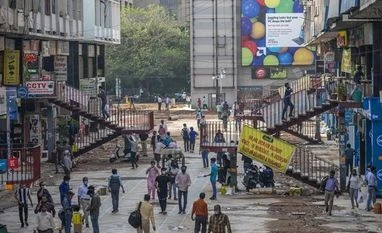
Lockdown, GDP
Measuring last quarter’s GDP has been the “most challenging exercise in a long time.
Vrishti Beniwal | Bloomberg
2 min read Last Updated : Aug 28 2020 | 10:23 AM IST
The coronavirus pandemic has made the job of predicting India’s economic growth -- already a fraught process in normal times -- even harder.

Economists are bracing for possible big swings in the quarterly gross domestic product data scheduled for release on Aug. 31 and significant revisions going forward. The statistics office suspended field surveys for several months after India went into lockdown in March, resulting in substantial data gaps.

Forecasts for GDP in the quarter through June range from a contraction of 15% to a decline of 25.9%, with a median estimate of -19.2% -- representing the worst performance since India started reporting quarterly data in 1996.

Measuring last quarter’s GDP has been the “most challenging exercise in a long time,” Sumedha Das Gupta, an economist at ICICI Bank Ltd., wrote in a report on Aug. 25. “Difficulty in gauging the extent of economic disruption under lockdowns may result in a starkly different number.”

The lack of field surveys add to the data complexities, with output in several sectors likely to be estimated and later revised once the hard numbers become available in coming months.
Measuring last quarter’s GDP has been the “most challenging exercise in a long time.

The data gaps could “imply imputation of value-added across major sub-sectors based on limited information from high-frequency indicators and thus prone to large revisions over time,” said Gaurav Kapur, an economist with IndusInd Bank Ltd. in Mumbai.

Incomplete price-level data, which are used as deflators to arrive at real growth, would also affect GDP numbers, he said.

Even before the pandemic, India’s GDP statistics have been a source of contention. A change in the methodology to calculate GDP introduced in 2015 made forecasting difficult, prompting some economists to use their own trackers of high-frequency indicators, which compare more closely with the old GDP series. Some are now relying on proxies to estimate output in the three months to June.

Economists are already updating their forecasts based on numbers available from alternative sources, like companies and tax collection.

State Bank of India’s Soumya Kanti Ghosh revised his fiscal first-quarter GDP estimate to a 16.5% year-on-year decline, milder than the 20% contraction previously predicted, “though with the relevant caveats in the current uncertain scenario.”

One subscription. Two world-class reads.

Already subscribed? Log in

Subscribe to read the full story →
*Subscribe to Business Standard digital and get complimentary access to The New York Times

Smart Quarterly

₹900

3 Months

₹300/Month

SAVE 25%

Smart Essential

₹2,700

1 Year

₹225/Month

SAVE 46%
*Complimentary New York Times access for the 2nd year will be given after 12 months

Super Saver

₹3,900

2 Years

₹162/Month

Subscribe

Renews automatically, cancel anytime

Here’s what’s included in our digital subscription plans

Exclusive premium stories online

  • Over 30 premium stories daily, handpicked by our editors

Complimentary Access to The New York Times

  • News, Games, Cooking, Audio, Wirecutter & The Athletic

Business Standard Epaper

  • Digital replica of our daily newspaper — with options to read, save, and share

Curated Newsletters

  • Insights on markets, finance, politics, tech, and more delivered to your inbox

Market Analysis & Investment Insights

  • In-depth market analysis & insights with access to The Smart Investor

Archives

  • Repository of articles and publications dating back to 1997

Ad-free Reading

  • Uninterrupted reading experience with no advertisements

Seamless Access Across All Devices

  • Access Business Standard across devices — mobile, tablet, or PC, via web or app

Topics :CoronavirusLockdownCoronavirus TestsCoronavirus VaccineIndian Economyeconomic growth

Next Story


