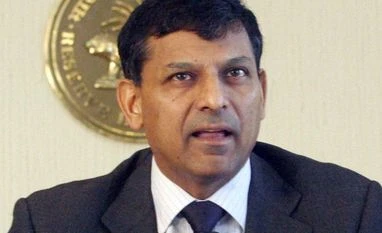
Rajan plays the role of an interviewer
Rajan started by asking whether as a central banker to the world of sorts, Lagarde manages enough sleep at night
BS Reporter Mumbai He is used to fielding questions from economic thinkers and media over the world, on almost everything under the sun - be it monetary policy, social inclusion or democracy. But Reserve Bank of India (RBI) Governor Raghuram Rajan went off the beaten track on Tuesday by choosing to be on the other side of the table, after Christine Lagarde, managing director of International Monetary Fund - an organisation where Rajan was once chief economist - finished her speech at the RBI headquarters here.
Rajan started by asking whether as a central banker to the world of sorts, Lagarde manages enough sleep at night. But without waiting for an answer, he shifted to a new question - "What are the known unknowns you worry about?" The answer from Lagarde was the fear of the unknown and market volatility.
Rajan's next question was how IMF is looking at the rise of populist parties who are anti-immigrants and whether she agrees with the view that there would be a backlash against globalisation. Lagarde said she doesn't think this trend has become "too excessive", and inclusive finance and multilateralism would prevail.
The last question was on unconventional monetary policies and what if these policies get extended over time, to which she said such a policy should be temporary in nature and used to deal with specific economic issues. Commenting on the impact of policies like quantitative easing and ultra-low interest rates, Lagarde said such moves were not "supposed to last forever".
Earlier, Rajan said India was better prepared to deal with capital outflows. "We can never say we have them fully under control but I think we are far better than where we were," he said during the event, referring to cross-border capital flows.
Even so, Rajan said he wished for more policy cooperation among central banks, adding this might emerge only if market volatility increased.

 "Rajan plays the role of an interviewer")


 Connect with us on WhatsApp