RBI in talks with govt over a Financial Resolution Authority
Describes relationship with Centre as cordial, sees economic growth picking up
Prashanth Reddy Chintala Hyderabad
Reserve Bank of India (RBI) Governor Raghuram Rajan has said the central bank is in talks with the Centre to set up a financial resolution authority (FRA).
“We really need a financial resolution authority so that we can close financial institutions in trouble, without necessarily merging those and taking the losses. We need to clean institutions…while resurrecting those functioning well. FRA will be the entity that will do it,” Rajan said in an hour-long interaction with students of the Indian School of Business here on Thursday.
He added RBI was also in discussions with the government about the monetary policy framework, in terms of making the objectives of the central bank more expressive. “One objective could be a specific level of inflation to which it can move. Another could be financial stability. The third objective could be growth. Also, what will be discussed is how to determine this process,” he said.
After taking charge of the central bank in September last year, Rajan had set up a committee under Deputy Governor Urjit Patel to review India’s monetary policy framework. Among other things, the panel suggested a shift to a rule-based monetary policy from the current discretionary monetary policy. It also suggested an inflation-targeting framework.
The government wants to announce the roll-out of the new monetary policy framework during the announcement of the 2015-16 Union Budget.
The RBI governor also said economic growth was picking up. He envisaged six per cent growth rate in the “final half of this year and next year and, hopefully, seven (per cent) a year after”. He added to sustain this growth and raise it, “we have to think of how we reform the system of fundamentals”.
Between September last year and January this year, RBI had raised the repo rate thrice to tackle inflation. The central bank has, however, maintained status quo in the rate in the past four policy reviews.
“We are trying to build the credibility of RBI and the government to keep inflation low. We are establishing we care about inflation and we keep it low; trust us. This allows us to promote growth,” he said.
He spoke of the need to restructure human resources within the central bank, adding there was broad consensus among the top management on the restructuring.
The restructuring process was started last week, with RBI increasing the number new executive directors and segregating regulatory and supervisory departments. The appointment of a fifth deputy governor as chief operating officer (COO), which has faced opposition from the government, is also a part of the exercise.
While the central bank primarily looks after five areas — supervision, regulation, market, monetary policy and general services — the proposed COO will be in charge of general services. For this, there has to be a fifth deputy governor. But the RBI Act stipulates only four.
“We have to change the Act. We are working with the government. Let’s see if it works,” Rajan said.
Prime Minister Narendra Modi had an ambitious agenda for India and expectations of him were very high, Rajan said, adding the government seemed to be focusing on improving the framework for doing business. “You need to make it easy for business to grow. That means finance; that means regulations; and that means skilled labour. I think the government is working on all these. If we can do this and scale up the whole thing, I don’t see why we cannot, over time, reach double-digit (growth rate).”
Emphasising the need to “put distress assets back on track”, Rajan spoke of the need to open the licensing process to establish new asset reconstruction companies.

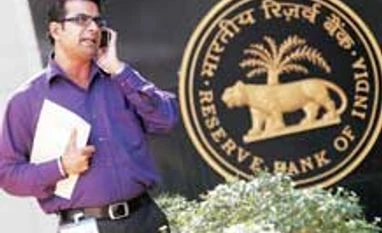 "RBI in talks with govt over a Financial Resolution Authority")


 Connect with us on WhatsApp