India’s economy grew 1.6 per cent in the fourth quarter of 2020-21, indicating that a recovery was well underway before the second wave of Covid-19 struck. For the full year (FY21), the country's gross domestic product (GDP) contracted 7.3 per cent. The growth in 2019-20 was 4 per cent.
Gross value added (GVA) grew 3.7 per cent in real terms in the March quarter, showing a sequential pick-up, as expected. For the full financial year, real GVA fell 6.2 per cent, slightly better than the earlier assessment of 6.5 per cent contraction. The improvement in GVA in Q4 came in when the Covid-19 caseload in India was at its lowest since the pandemic began — the trough appeared somewhere in the middle of February.
The recovery, however, is certain to have lost steam due to the second wave, which began in March and peaked in April and May, or during the first two months of the first quarter (Q1) of FY22. This is certain to have a substantial impact on growth in the new fiscal year.
The recovery in Q4 was nevertheless impressive in the sense that nominal GDP grew at 8.7 per cent, which was faster than the growth witnessed in Q2 and Q3 of 2019-20, showing the gravity of economic slowdown that began before Covid-19.
What stands out is the sharp recovery in construction activity. Real GVA in construction grew by a staggering 14.5 per cent in Q4, after growing 6.5 per cent in Q3. This mass-employment sector had shown the highest contraction in GVA in the first quarter of FY21, when a national lockdown was in place.
This could mean that the projects that were stuck during the lockdown and were reviving during the unlock phase got expedited in Q4, reflecting strong growth, Pronab Sen, former chief statistician of India, told Business Standard.
“If new investments do not come in, which seems to be the case, then the construction pipeline may dry up and it may dent investments in the second and third quarters of FY22,” he said.
The recovery in investments on the expenditure side was in line with that in construction on the supply side. Real Gross Fixed Capital Formation grew 10.6 per cent in Q4.
Manufacturing GVA, too, rebounded strongly, growing the fastest in 11 quarters in Q4, at 6.9 per cent over the previous year. Agriculture grew in the range of 3-4.5 per cent in all the four quarters, showing resilience.
The crisis in services, however, seems worrisome. They occupy more than half of India’s economy, and failed to revive even when most of the economy was opened up in the January - March period. Services GVA, excluding construction, grew by only 1.8 per cent in Q4, followed by three quarters of contraction.
On the expenditure side, real consumer spending grew feebly in Q4, by 2.7 per cent over the previous year. As a result, real Private Final Consumption Expenditure fell 9.1 per cent for the full year FY21. Real Government Final Consumption Expenditure grew 28.3 per cent in Q4, backed by massive spending by the Centre in the March quarter, that included clearing of subsidy arrears.
Unlike consumer spending, real investments grew at 10.6 per cent. This took the investment rate, which is the rate of GFCF to GDP, above the 30 per cent barrier after almost six years, to reach 31.2 per cent of GDP.

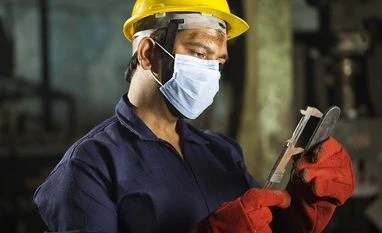 "Recovery gains strength: GDP grows 1.6% in Q4, shrinks 7.3% in FY21")












