Telecom association demands 'converged' law for various digital services

The telecom industry body was responding to a DOT consultation paper, which aims at reviewing the existing legal and regulatory provisions governing telecommunications
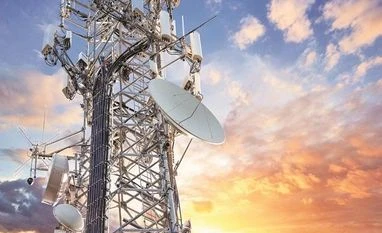
DoT, Department of Telecommunication
The telecom association has pushed for a reduction in license fee, saying that it should be charged only towards the administrative expenses and be brought down from 3 per cent to 0.5-1 per cent of the AGR
Surajeet Das Gupta New Delhi
3 min read Last Updated : Sep 13 2022 | 10:45 PM IST
The Cellular Operators Association of India (COAI) has asked for a law that addresses the need for “convergence” of various digital services, including telecommunication connectivity, carriage of broadcasting content, and over-the-top (OTT) communication services that are provided using any technology or network, terrestrial or non-teresstrial, including a satellite-based communication network.

The telecom industry body was responding to a DOT consultation paper, which aims at reviewing the existing legal and regulatory provisions governing telecommunications.

The COAI has submitted that the outcome of this consultation process should result in “developing of converged law and regulation for telecom (both terrestrial and satellite) broadcasting and IT, and also addressing the legal and regulatory issues related to data privacy and related-security issues.”

The cellular operators’ association has said that the technology and digital landscape of the sector is extremely dynamic. Therefore, the law should be future-proof, as far as possible, to meet the requirements of rapidly changing technologies and industry dynamics. “So there is need to ensure level playing field among all technologies, for example same service, same rules with respect to OTT communication services,” it pointed out in its submission.

The COAI further said the “stated lines between broadcasting and telecom networks are fast disappearing with digital technologies.” These two platforms are increasingly complementing each other with the growing adoption of high-speed broadband networks and consumers are demanding the same content experience (OTT + linear) across all screens — smartphone, TV, and PC — and looking for bundled services.

As a result, the deployment of digital technologies has led to market convergence and an “intermodal” competition, as telephone, cable, broadcasting, wireless networks, and OTT applications increasingly are able to offer voice, data, and video services over a single broadband platform.

It further pointed out that the advent of edge computing and cloud-based services, and leveraging of artificial Intelligence and Big Data for providing newer services are leading to more and more convergence. In its submission, the COAI said such convergence is also creating a pressing need for uniform policies from a data security policy perspective and cooperation with law enforcement agencies, among others. The COAI has argued “this is an opportune time for a comprehensive legal framework which shall aid in the development of new technologies in a converged era to boost investor confidence.”

The telecom association has pushed for a reduction in license fee, saying that it should be charged only towards the administrative expenses and be brought down from 3 per cent to 0.5-1 per cent of the AGR.

That is because currently spectrum is not given at an administrative price like earlier, but through auction.

It has also asked for a rationalisation of the definition of AGR and suggested that the definition of gross should only include revenue received directly from the customer for providing services, which can only be provided under a license issued under the Indian Telegraph Act, 1885.

The association has argued that income items like revenue from capital receipts, reimbursement of expenditure made on behalf of third parties, gain/loss arising on any business arrangement like merger, slump-sale, and notional revenue should be on the exclusion list to arrive at AGR.

One subscription. Two world-class reads.

Already subscribed? Log in

Subscribe to read the full story →
*Subscribe to Business Standard digital and get complimentary access to The New York Times

Smart Quarterly

₹900

3 Months

₹300/Month

SAVE 25%

Smart Essential

₹2,700

1 Year

₹225/Month

SAVE 46%
*Complimentary New York Times access for the 2nd year will be given after 12 months

Super Saver

₹3,900

2 Years

₹162/Month

Subscribe

Renews automatically, cancel anytime

Here’s what’s included in our digital subscription plans

Exclusive premium stories online

  • Over 30 premium stories daily, handpicked by our editors

Complimentary Access to The New York Times

  • News, Games, Cooking, Audio, Wirecutter & The Athletic

Business Standard Epaper

  • Digital replica of our daily newspaper — with options to read, save, and share

Curated Newsletters

  • Insights on markets, finance, politics, tech, and more delivered to your inbox

Market Analysis & Investment Insights

  • In-depth market analysis & insights with access to The Smart Investor

Archives

  • Repository of articles and publications dating back to 1997

Ad-free Reading

  • Uninterrupted reading experience with no advertisements

Seamless Access Across All Devices

  • Access Business Standard across devices — mobile, tablet, or PC, via web or app

Topics :telecom servicesOTT servicesonline mediatelecom marketDepartment of TelecommunicationsDTHDoTOTT platformsDTH industrytelecom sector

Next Story



