Toll booths open to biz, but India's oldest highway wears deserted look

Constructed by Sher Shah Suri in the 16th century, the original road over the years extended right up to Kabul in Afghanistan (in the west) and Chittagong in Bangladesh (in the east).

Toll, highway, NHAI, Trucks, roads, transport, drivers
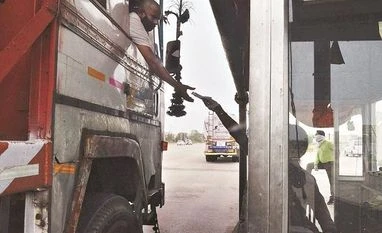
The NHAI on Monday resumed toll collection after 26 days. At the Sonipat toll plaza in Haryana, there are about 10 booths to collect the levy Photo: Sanjay K Sharma
Megha Manchanda New Delhi
5 min read Last Updated : Apr 21 2020 | 1:09 AM IST
The Grand Trunk road that links Delhi to Haryana and Punjab is not buzzing with the usual traffic despite the ongoing harvest season in the two states that form India’s grain bowl.
 
Constructed by Sher Shah Suri in the 16th century, the original road over the years extended right up to Kabul in Afghanistan (in the west) and Chittagong in Bangladesh (in the east). It is now part of the National Highway 1 that goes up to Kashmir with one of its spurs ending in Atarri, the land port between India and Pakistan.
 
On the highway, dhabas (eateries), some of which are known for serving local cuisine not just to truckers but also tourists, are still shut. “I started from Kanpur for Panipat with some home cooked food but during the entire journey, there was no food available from any of the state governments (Uttar Pradesh, New Delhi or Haryana).


Dhaba owners were not allowing us to enter their premises due to fear of infection and the police personnel were not letting us cook on the road, which we do under normal circumstances,” said 43-year-old Vijay Kumar, who moves products for Indian Oil Corporation’s Panipat refinery. He is comforted by the idea that after about 50 km, he will get food at the refinery. Simultaneously, he will undergo thermal screening at the unit to see if has contracted any infection during the journey.
 
Vehicle owners have been gearing up for lifting of partial shutdown for factories and drivers have managed to join fleet owners in the last two days, said S P Singh, senior fellow and coordinator, Indian Foundation of Transport Research and Training (IFTRT).

The Centre had allowed limited economic activity in safe zones from Monday but with parts of Haryana, Punjab and Delhi in the red zone, there is not much pick up in traffic. “Only 10-15 per cent out of the 5.2 million trucks are on road moving essentials, like rabi crops from the farms. In the next three to four days, the number of trucks on the road may go up to around 2 million from 1- 1.2 million now,” said Singh.
 
While some restaurant owners were unaware of the revised ministry of home affairs (MHA) guidelines that eased the national lockdown, others were unwilling to take the risk of opening their doors just yet.
 
Caretaker of the popular eatery Mannat Dhaba at Murthal in Haryana fears the risk of his brand name getting tainted if any customer, who comes to the restaurant, tests positive for Covid-19.

“Why should we open…what if someone infected comes and spreads the disease further? The authorities will seal our premises and no one will ever come to our eatery. So, even if the government (Centre or state) says restaurants can open, we will not open,” said Raj Singh, who has been staying put in the premises since March 24 when the nationwide lockdown began.
 
Besides the fear of contagion, it is the exodus of helpers that has hit these eateries hard. “Once the workers leave, they don’t come back that soon and with this crisis we don’t see them coming in less than a year. We also fear payment of monthly rent, which runs into lakhs….with no income in sight for a while, the future looks bleak,” said Singh.

Another restaurant Amrik Sukhdev, which usually sees long queues of cars with people waiting to devour its north Indian spread, had its shutters down with a couple of caretakers barricading the premises.
 
The petrol stations on the national highway were nearly empty and so were the vehicle repair shops adjacent to them.
The National Highways Authority of India (NHAI), which had suspended toll collection on the highways for 26 days, on Monday resumed collection of the levy. At the Sonipat toll plaza in Haryana, there are about 10 booths to collect the levy. There are long queues here on normal days despite the introduction of FASTag,  the electronic toll collection system.
 
On instructions of the local authorities, only three booths were open on Monday but queues were missing. Some three-four trucks pass by briskly. This arrangement would have been insufficient to cater to the massive transport movement on one of the country’s busiest and oldest highways. 

“The traffic is not even half of what we usually encounter here,” said Bharti with a mask across her face. The 20-year-old girl works for Riddhi Siddhi Associates, the company that manages the plaza for NHAI near Murthal. The bare minimum staff at the booths is equipped with masks, gloves and sanitizers.
 

One subscription. Two world-class reads.

Already subscribed? Log in

Subscribe to read the full story →
*Subscribe to Business Standard digital and get complimentary access to The New York Times

Smart Quarterly

₹900

3 Months

₹300/Month

SAVE 25%

Smart Essential

₹2,700

1 Year

₹225/Month

SAVE 46%
*Complimentary New York Times access for the 2nd year will be given after 12 months

Super Saver

₹3,900

2 Years

₹162/Month

Subscribe

Renews automatically, cancel anytime

Here’s what’s included in our digital subscription plans

Exclusive premium stories online

  • Over 30 premium stories daily, handpicked by our editors

Complimentary Access to The New York Times

  • News, Games, Cooking, Audio, Wirecutter & The Athletic

Business Standard Epaper

  • Digital replica of our daily newspaper — with options to read, save, and share

Curated Newsletters

  • Insights on markets, finance, politics, tech, and more delivered to your inbox

Market Analysis & Investment Insights

  • In-depth market analysis & insights with access to The Smart Investor

Archives

  • Repository of articles and publications dating back to 1997

Ad-free Reading

  • Uninterrupted reading experience with no advertisements

Seamless Access Across All Devices

  • Access Business Standard across devices — mobile, tablet, or PC, via web or app

Topics :CoronavirusLockdownGrand Trunk RoadTolltoll taxNHAIHighwaysNational HighwaysRoad Transporttrucks

Next Story