4 min read Last Updated : Dec 05 2020 | 12:07 AM IST
In a post-policy virtual press meet, Reserve Bank of India (RBI) Governor Shaktikanta Das, Deputy Governor Michael Debabrata Patra, and Deputy Governor M K Jain spoke on several issues, including asymmetrical distribution of liquidity in money markets, the central bank’s recent interventions to save bank failures, the emerging non-performing assets of commercial banks, and the recent suggestions of the internal working group. Edited excerpts:
The three-month and even one-year money market rates are lower than the policy rate. Is it a deliberate design by the RBI to keep so much liquidity?
Patra: The level of liquidity is a function of the stance of monetary policy. The MPC has adopted an accommodative stance and has given a time-bound guidance. So you would expect liquidity to be comfortable. The rates you see are below the reverse repo rate because collateralised rates typically tend to be below uncollateralised ones. Another factor that you should bear in mind is that there is an asymmetrical distribution of liquidity in the money market. So those that have access to the liquidity adjustment facility (LAF) are quoting rates within the LAF corridor. But non-banks like mutual funds and others, which do not have access to the LAF, are quoting rates below that. Our hope and endeavour is that banks will intermediate these flows in the market and there will be a more evening out of rates. We do not want to intervene in market processes.
Has there been a marked shift in the RBI’s stance in the case of bank bailouts as far as bondholders are concerned?
Das: The RBI is not indifferent to any segment of the economy or the financial market. We take decisions in the best interests of depositors. And, all our actions are within the legal framework.
Is the Covid shock to the financial system yet to be felt?
Das: We have made our internal assessment of the likely non-performing asset (NPA) scenario. The Supreme Court hearings are in the final stages. We will wait for the court orders. Once we get the them, and once we update our assessment, we will spell it out in the Financial Stability Report.
Are you worried that surplus liquidity can lead to greater inflation? The RBI’s internal working group (IWG) has made a distinction between bank licences to companies and those to non-banking financial companies that companies own. Are they different?
Das: It is a report by the internal working group of the RBI. It should not be seen as RBI’s point of view or decision. The IWG had two external members, who are also members of the RBI central board. They have acted independently. The RBI has not taken any decision on these. We will receive comments on the subject. After that, we will take a decision.
Patra: We will use instruments to ensure that the markets are assured of liquidity. Yes, excess liquidity can sow the seeds of inflation. We are keeping a close watch on the situation. Our assessment is that inflation pressure is emanating from supply-side disruption, retailers charging higher margins, and some amount of indirect taxes. An element of demand which can cause mischief is still muted, and we will take action as necessary.
Is there something lacking in the supervisory mechanism of the RBI?
Das: Over the past two years we have strengthened and deepened our supervisory systems. The kind of deep-dive analysis that we are now doing is something that has not been done before. In the case of the two banks in which the RBI had to intervene, it was not as if the central bank was not aware of what was happening. Our first focus is to work with the management of the bank and resolve the problem. Only when we see a need for regulatory intervention do we intervene.
Is the RBI giving any thought to introducing the wholesale price index (WPI), along with the consumer price index (CPI), as an inflation anchor?
Das: Wait for the report to come. At least we are not considering the WPI element. In any case, it has to be part of the law. The current law says inflation targeting is based on CPI inflation and the final call will be taken by Parliament and the government. Having said that, I don’t foresee switching from the CPI.

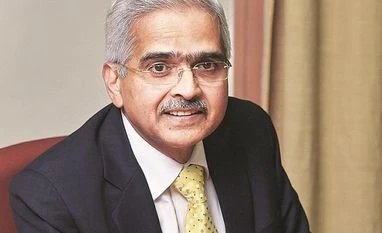 "We intervene in banks in the interests of depositors: RBI's Shaktikanta Das")











