A big step towards 'ease of living': PM Modi opens 75 digital banking units

The DBUs will help banks that are now looking to reduce their physical footprint with fewer brick-and-mortar branches, with a 'light' banking approach.
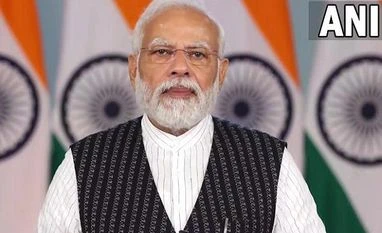
PM Modi
Prime Minister Narendra Modi
Nikesh Singh New Delhi
3 min read Last Updated : Oct 16 2022 | 10:37 PM IST
Prime Minister Narendra Modi on Sunday said the 75 digital banking units (DBUs) in 75 districts is a big step towards ‘ease of living’ for common citizens and will open up a whole new world of possibilities by combining financial partnerships with digital partnerships.

Inaugurating the 75 DBUs virtually, Modi said the special banking system shall work to provide maximum services from minimum digital infrastructure. “It will also simplify the banking procedure while providing a robust and secure banking system. In a village, in a small town, when a person takes the services of a digital banking unit, everything from sending money to taking loans will become easy, online,” he added.

In her FY23 Budget speech, Finance Minister Nirmala Sitharaman announced that 75 DBUs would be set up to ensure that the benefits of digital banking reach every nook and corner of the country in the 75th year of Independence.

As many as 11 public sector banks, 12 private sector banks, and one small finance bank have established brick-and-mortar DBU outlets across the country that will operate round the clock. DBUs will provide a variety of digital banking facilities to people, such as opening savings accounts through eKYC/video KYC, balance-check, printing passbooks, transfer of funds, investment in fixed deposits, loan applications, stop-payment instructions for cheques issued, applying for credit/debit cards, viewing statement of account, paying taxes, paying bills, and making nominations.

The DBUs will help banks that are now looking to reduce their physical footprint with fewer brick-and-mortar branches, with a ‘light’ banking approach. The move may open up the rural market for service providers, besides providing a boost to credit flow.

Participating in the event from the US, Sitharaman said DBUs will go a long way in giving further impetus to digital banking in India and help the economy to move towards a cashless and inclusive economy. “DBUs will enable people who don’t have a personal computer, laptop, or even a smartphone to be able to access banking services. The government’s credit-linked schemes through the Jan Samarth portal will also be available for ordinary users,” she added.

State Bank of India, the country’s largest lender, has opened 12 of the 75 DBUs, in places like Port Blair in Andaman & Nicobar Islands, Balod in Chhattisgarh, and East, North and West Sikkim, among others. Bank of Baroda has opened 8 DBUs, which are in Varanasi, Kota, Vadodara, among others.

HDFC Bank – the country’s largest private sector bank -- has opened 4 DBUs in Haridwar, Chandigarh, Faridabad (Haryana), and South 24 Parganas (WB). ICICI Bank – the second largest private sector bank has also opened 4 DBUs, in Dehradun, Karur (TN), Kohima, and Puducherry.

Banks that have opened maximum DBUs
  • State Bank of India-  12
  • Bank of Baroda- 8
  • Union Bank of India- 6
  • Canara Bank-  5
  • Punjab National Bank- 4
  • HDFC Bank-  4
  • ICICI Bank- 4
  • Axis Bank- 3
  • Indian Bank- 3
DBUs: Taking the lead
 
4 DBUs in each of these states
  • Karnataka, Odisha, Rajasthan, Tamil Nadu, Uttar Pradesh
3 DBUs in each of these states
  • Gujarat, Kerala, Madhya Pradesh, Maharashtra, Punjab, Sikkim, Telangana
Services offered
 
Financial services to be provided by the DBUs include savings, credit, investment and insurance. On the credit delivery front, the DBUs will provide end-to-end digital processing of small ticket retail, and MSME loans, starting from online applications to disbursals. They will also provide services related to certain government-sponsored schemes.

Two modes of services
  • Self-service (24X7 and 365 days basis)
  • Assisted

One subscription. Two world-class reads.

Already subscribed? Log in

Subscribe to read the full story →
*Subscribe to Business Standard digital and get complimentary access to The New York Times

Smart Quarterly

₹900

3 Months

₹300/Month

SAVE 25%

Smart Essential

₹2,700

1 Year

₹225/Month

SAVE 46%
*Complimentary New York Times access for the 2nd year will be given after 12 months

Super Saver

₹3,900

2 Years

₹162/Month

Subscribe

Renews automatically, cancel anytime

Here’s what’s included in our digital subscription plans

Exclusive premium stories online

  • Over 30 premium stories daily, handpicked by our editors

Complimentary Access to The New York Times

  • News, Games, Cooking, Audio, Wirecutter & The Athletic

Business Standard Epaper

  • Digital replica of our daily newspaper — with options to read, save, and share

Curated Newsletters

  • Insights on markets, finance, politics, tech, and more delivered to your inbox

Market Analysis & Investment Insights

  • In-depth market analysis & insights with access to The Smart Investor

Archives

  • Repository of articles and publications dating back to 1997

Ad-free Reading

  • Uninterrupted reading experience with no advertisements

Seamless Access Across All Devices

  • Access Business Standard across devices — mobile, tablet, or PC, via web or app

Topics :Nirmala SitharamanDigital bankingEase of Living IndexNarendra ModiIndian Economyrural bankingModi 2.0economy growthBanking sectorIndian banking sector

Next Story



