Even best policies might fail to address the economic crises: RBI
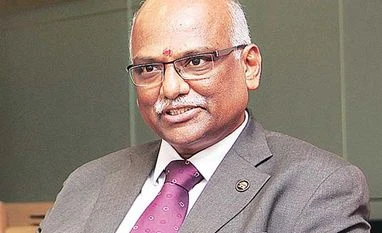
RBI Deputy Governor R Gandhi asks companies to look at bond market for raising funds, rather than tapping only traditional banking channels
BS ReporterPTI Chennai Even the best of macro-prudential policies might fall short while addressing serious economic crises and might not be able to foresee such challenging situations, said Reserve Bank of India (RBI) Deputy Governor R Gandhi.
He was speaking at the 'Union Bank Conference on Financial Stability, Credit distress and Economic Growth: The way forward' at Great Lakes Institute of Management, Chennai on Friday. Macro-prudential policy is the approach to financial regulation aimed at mitigating the risk of the financial system as a whole. According to him, the challenge is to establish an implementable framework to deal with the emerging systemic risks at an early stage.
"Future crisis also may not replicate any of the past ones. Hence, history might not always be of help. Complacency may slowly set in even as our memories of bad times are gradually fading away," he said. Gandhi said the banking regulator would make bond markets safer and easier to access, which would attract companies to raise money through corporate bonds.
"We are trying to limit access to the banking finance, so that corporates can look at the bond market. Besides, we are taking measures to make information available and bring transparency to make the bond market more accessible," he added. He said RBI has called for suggestions, based on which it would take appropriate decisions.
He, however, declined to speak further on this. Gandhi noted there should be a methodology to measure the profitability and efficiency after taking into account what public sector banks (PSBs) do as part of their corporate social responsibility, which doesn't bring return to the banks. Thanks to the implicit government support they get, PSBs are considered relatively immune to destabilising impacts. "However, the same sense of safety evades PSBs when it comes to their valuations," said Gandhi. According to him, this has an efficiency imperative, when judged by their returns on asset or capital employed.
Gandhi said with the Indian government thinking of new performance-based norms for capital infusion, this disconnect would be addressed. "The move to link budgetary capital allocation with performance needs to be seen as a serious attempt to convey the right signal to all banks to introspect and, if necessary, redefine their business strategies," said Gandhi.
According to him, the new norms will be value-enhancing for PSBs in the long run. He added that PSBs should be allowed to work on commercial principles while continuing with their social obligations.
Gandhi said the global financial crisis brought into the fore the conflicts between regulation and innovation. The reason why regulators faced the flak for the crisis was they were perceived to be inadequate to address the excesses committed by industry in the name of innovation.
"While it is necessary to align the policy environment and innovation strategies with the available regulatory capacity, the latter needs to be upgraded to match the natural course of economic development.
Sometimes, necessary innovations won't even take off due to the policy-making process getting influenced by paradoxes of innovative endeavors such as success failure paradox and/ or feedback rigidity paradox," he observed.
While regulation can provide an enabling environment, it is for the market participants to exploit the opportunities provided. But, they have to go by the rule book.

 "Even best policies might fail to address the economic crises: RBI")


 Connect with us on WhatsApp