Four-tier scale-based regulatory guidelines for NBFCs from Oct 2022: RBI

Regulator limits IPO financing at Rs 1 cr per borrower
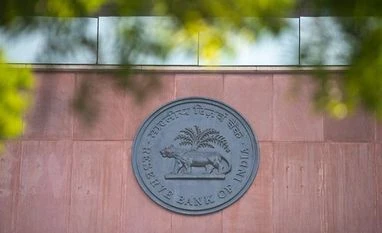
RBI, Reserve Bank of India
Photo: Shutterstock
Abhijit Lele Mumbai
4 min read Last Updated : Oct 23 2021 | 1:28 AM IST
A four-layered scale-based approach to regulate non-banking finance companies (NBFC) in the country will kick in from October 1, 2022 to ensure tight oversight of the sector. Further, the Reserve Bank of India (RBI) has set a limit of Rs 1 crore per borrower for financing subscriptions to initial public offer (IPO). The ceiling will come into effect from April 1, 2022. The NBFC sector can fix more conservative limits, the RBI said in its preface to the new rules.

The regulatory structure will comprise four layers based on their size, activity, and perceived risk. The lowest layer will be the base layer, followed by the middle, upper and top layers. The top layer might remain empty, the RBI.

The base layer will have non-deposit-taking NBFCs with assets worth up to Rs 1,000 crore. Finance firms working as peer-to-peer (P2P) lending, account aggregator firms, non-operative financial holding company (NOFHC) and entities that do not avail of public funds or have any customer interface will also be in this layer.

The middle layer will comprise deposit-taking NBFCs irrespective of asset size, non-deposit-taking firms with assets worth Rs 1,000 crore or more, as well as housing finance firms. Standalone primary dealers, infrastructure debt fund investment companies and infrastructure finance companies will also come under this category.

NBFCs which warrant enhanced regulatory requirements based on a set of parameters and scoring methodology will feature in the upper layer. The top-10 eligible NBFCs in terms of asset size will always be in the upper layer, irrespective of any other factor.

The top layer can get populated if the regulator thinks there is a substantial increase in the potential risk from specific NBFCs in the upper layer. 

Government-owned NBFCs will be placed in the base or middle layer, and not in the upper layer until further notice.

The regulatory revision announcement comes after the RBI in January this year released a discussion paper — ‘Revised Regulatory Framework for NBFCs -- A Scale-based Approach’ — for public comments.

The regulatory minimum net-owned fund for finance companies acting as microfinance firms and those factoring business will be increased to ₹10 crore. 

The RBI has set a three-year glide path for the existing NBFCs to achieve the net-owned funds (NOF) of Rs 10 crore.

However, for NBFC-P2P, NBFC-AA, and those with no public funds and no customer interface, the NOF shall continue to be Rs 2 crore.

The RBI has revised existing norms for classifying loans as non-performing assets (NPAs). Now, the overdue of more than 90 days will be termed NPAs for all categories of NBFCs. The central bank has provided a three-year transit period to NBFCs in the base layer to adhere to the revision.

NBFCs in middle and upper layers have to make a thorough internal assessment of the need for capital, commensurate with the risks in their business.

NBFCs in the upper layer will have to have a common equity tier-1 capital of at least nine per cent to enhance the quality of regulatory capital. In addition to the CRAR, the upper layer NBFCs will also be subjected to leverage requirements to ensure that their growth is supported by adequate capital.

A suitable ceiling for leverage will be prescribed subsequently as and when necessary, the RBI said.

Reputation of NBFCs dented of late: RBI deputy governor M Rajeshwar Rao

Highlighting the fact that the reputation of the non-banking finance sector has suffered in recent times with a handful of large lenders going bust, the Reserve Bank of India deputy governor M Rajeshwar Rao said there is a need to “restore trust in the sector” by ensuring that few entities or activities do not generate vulnerabilities that give rise to systemic risk.“...the reputation of the non-banking financial sector has been dented in recent times by failure of certain entities due to idiosyncratic factors”, he said. 

One subscription. Two world-class reads.

Already subscribed? Log in

Subscribe to read the full story →
*Subscribe to Business Standard digital and get complimentary access to The New York Times

Smart Quarterly

₹900

3 Months

₹300/Month

SAVE 25%

Smart Essential

₹2,700

1 Year

₹225/Month

SAVE 46%
*Complimentary New York Times access for the 2nd year will be given after 12 months

Super Saver

₹3,900

2 Years

₹162/Month

Subscribe

Renews automatically, cancel anytime

Here’s what’s included in our digital subscription plans

Exclusive premium stories online

  • Over 30 premium stories daily, handpicked by our editors

Complimentary Access to The New York Times

  • News, Games, Cooking, Audio, Wirecutter & The Athletic

Business Standard Epaper

  • Digital replica of our daily newspaper — with options to read, save, and share

Curated Newsletters

  • Insights on markets, finance, politics, tech, and more delivered to your inbox

Market Analysis & Investment Insights

  • In-depth market analysis & insights with access to The Smart Investor

Archives

  • Repository of articles and publications dating back to 1997

Ad-free Reading

  • Uninterrupted reading experience with no advertisements

Seamless Access Across All Devices

  • Access Business Standard across devices — mobile, tablet, or PC, via web or app

Topics :IPORBINBFCs

Next Story



