Friday’s mega announcement merging four sets of banks was the outcome of a process the government had started about six months ago, people working on the plan pointed out.
The back story suggests it was in May, days before results for the general elections were announced, that the informal discussions with the Reserve Bank of India took place at a meeting in New Delhi. RBI deputy governor M K Jain, finance secretary Rajiv Kumar were among the key officials who attended that meeting.
While various permutations and combinations were discussed including merger of several banks into one, the policy makers were convinced that the Bank of Baroda (BoB) model of amalgamation was the best. The merger of Vijaya Bank and Dena Bank with BoB came into effect on April 1.
“Integration of customer services for numerous banks would have been difficult. So, we decided to stick to the BoB-like model,” an official explained.
Even as various aspects of the merger were being analysed, technology integration was seen as a key driver when the banks were matched with each other. Finance Minister Nirmala Sitharaman announced on Friday that Punjab National Bank (PNB) will take over Oriental Bank of Commerce (OBC) and United Bank of India (UBI) to become the country’s second-largest lender after State Bank of India (SBI) in terms of business. Canara Bank will subsume Syndicate Bank; Andhra Bank and Corporation Bank will merge with Union Bank of India; and Allahabad Bank will become part of Indian Bank.
Narayanan has had his share of experience in PSB mergers as he was the chief executive of Vijaya Bank when it was merged into Bank of Baroda.
Similarly, Chennai-based Indian Bank and Kolkata-based Allahabad Bank operate on BaNCS platform and despite their geographical diversities were decided to be merged. Indian Bank being the bigger bank, in terms of business size, was chosen to be the acquirer bank - a thumb rule in all these mergers.
The government has been making efforts for merging PSBs since August 2017 when the Union Cabinet approved a mechanism for it. As per the mechanism, “the proposal must start from the boards of banks.” But instead of banks spearheading the merger process, as was envisaged, the finance ministry took the lead.
The government has set a target for merger of all 10 banks by April 1, 2020. “Announcing one set of bank merger at a time would have become a long-drawn process,” the official added.
But among six PSBs, a lender like Bank of India was left out of the merger process. “Bank of India came out of RBI's PCA framework recently and it requires time to be on its own,” financial services secretary Rajiv Kumar said.
A group of ministers including finance minister Nirmala Sitharaman and commerce and industry minister Piyush Goyal gave the go-ahead for the merger last week.

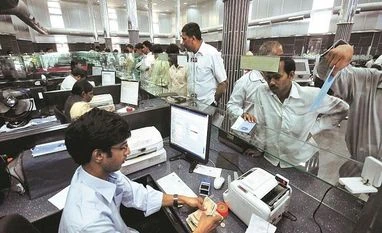 "How technology integration, regional synergies drove bank merger plan")












 Connect with us on WhatsApp