Must commend RBI for defusing NBFC crisis: Former governor Subbarao

The banks don't provide for their bad debts adequately, and take four to five years to provide for them, which creates problems.
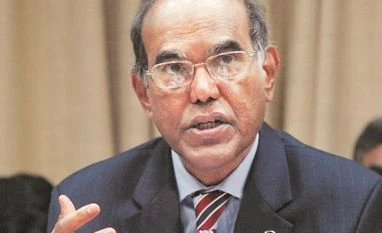
Subbarao
Former RBI governor Duvvuri Subbarao.
Anup Roy Mumbai
4 min read Last Updated : Nov 10 2020 | 11:20 PM IST
The Reserve Bank of India (RBI) has done a commendable job in preventing a crisis in the non-banking financial companies (NBFC) sector, and should be given more credit for protecting the financial system, former governor Duvvuri Subbarao said on Tuesday. 

“I believe the RBI under governor (Urjit) Patel first and then under (Shaktikanta) Das acted with extreme alacrity and haste to defuse the NBFC bubble and then to prevent the bubble from snowballing into a crisis,” said Subbarao.  

He was speaking as part of a panel at the launch of a book titled Pandemonium: The Great Indian Banking Tragedy authored by Tamal Bandyopadhyay.  

Discussing the book, former deputy governor Viral Acharya aired his frustration with public sector banks (PSBs) which are throwing up huge non-performing asset (NPA) numbers. The banks don’t provide for their bad debts adequately, and take four to five years to provide for them, which creates problems.  

“We have used taxpayer money to throw money into the bad balance sheets of PSBs. Taking the balance sheets together, it’s a massive bad bank in my view. And every time I looked at it, I reached no other conclusion rather than saying that we are basically running a massive bad bank and continue to operate with it, rather than running it off as quickly as possible,” Acharya said.  

India has used $100 billion capitalising PSBs over the last 10-12 years, but this money could have been utilised in a better manner, Acharya said.  

“In 2019, PSBs held 61 per cent of advances, but created 78 per cent NPA. So, while the specific characters and poster children from private sector banking have made more headlines, I would say that as a system, private banking sector has served India far better than PSBs,” Acharya said, adding that there have been no fixes for this problem in the last three decades.  

Defending PSBs, former State Bank of India (SBI) chairman Rajnish Kumar said the root cause could be lying within the system itself, and it won’t be right to blame banks alone.  

“We work in a system where the country is capital starved. In all the development work in the country, the responsibility falls on the shoulders of the banking system,” Kumar said. According to the former SBI chief, till the asset quality review (AQR) of 2015, the mindset of the Indian banking system was to rehabilitate, partly because of the legal framework before the bankruptcy code was inefficient. “If the legal system is such that there is no way you can recover your money, and till 2016 that was the state of affairs. So how do you blame bankers that they were indulging in restructuring and not pulling the plug straightaway?” 

“And then we have a system where the governments don’t pay. The central governments, state governments, the discoms, they are quarrelling with contractors and service providers. And you have a 90-day norm for recognising NPAs. Is there not an incongruence in the payment culture in the country and norms for recognising NPAs,” the former SBI chairman asked.  

Uday Kotak, managing director and CEO of Kotak Mahindra Bank, said while there are ills in the system, “if we get the balance between the amount of money needed to spend for growth, versus the discipline on the fiscal side, I am actually of the belief that there are not too many places in the world that offer the kind of opportunity India does,” Kotak said.  

“India has a great ability to disappoint both the optimist and the pessimist. But I do believe that India gets to the right thing after exploring all other options. India is at that cutting edge, I think,” said Kotak.

One subscription. Two world-class reads.

Already subscribed? Log in

Subscribe to read the full story →
*Subscribe to Business Standard digital and get complimentary access to The New York Times

Smart Quarterly

₹900

3 Months

₹300/Month

SAVE 25%

Smart Essential

₹2,700

1 Year

₹225/Month

SAVE 46%
*Complimentary New York Times access for the 2nd year will be given after 12 months

Super Saver

₹3,900

2 Years

₹162/Month

Subscribe

Renews automatically, cancel anytime

Here’s what’s included in our digital subscription plans

Exclusive premium stories online

  • Over 30 premium stories daily, handpicked by our editors

Complimentary Access to The New York Times

  • News, Games, Cooking, Audio, Wirecutter & The Athletic

Business Standard Epaper

  • Digital replica of our daily newspaper — with options to read, save, and share

Curated Newsletters

  • Insights on markets, finance, politics, tech, and more delivered to your inbox

Market Analysis & Investment Insights

  • In-depth market analysis & insights with access to The Smart Investor

Archives

  • Repository of articles and publications dating back to 1997

Ad-free Reading

  • Uninterrupted reading experience with no advertisements

Seamless Access Across All Devices

  • Access Business Standard across devices — mobile, tablet, or PC, via web or app

Topics :Reserve Bank of IndiaNBFCsNBFC crisis

Next Story



