RBI's status quo policy may revolve around Covid-19 pandemic measures

RBI's forecast for growth is 10.5% for the current fiscal year. Most analysts expect the RBI to lower it in the June 4 monetary policy announcement
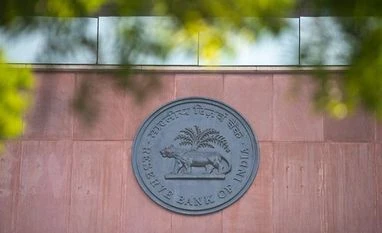
RBI, Reserve Bank of India
The RBI has moved out of its time-based guidance to state-based guidance, and has said it will maintain the accommodative stance till there are durable signs of growth
Anup Roy Mumbai
4 min read Last Updated : May 31 2021 | 6:10 AM IST
A near certainty that there will be no rate change in the June 4 policy will turn the focus on other measures to be announced by the Reserve Bank of India (RBI), said 12 economists and bond experts polled by Business Standard.

The RBI has moved out of its time-based guidance to state-based guidance, and has said it will maintain the accommodative stance till there are durable signs of growth. That makes the entire process data-based, which does not suggest tweaking the rates.

So, the repo rate would likely continue to remain at 4 per cent for the entire calendar year.

This will be done despite inflation numbers creeping up, which the RBI will take in its stride.

In April, the wholesale price inflation rate rose to more than a decade-high of 10.49 per cent, largely due to a favourable base effect. But the consumer price index-based retail inflation rate continues to be above 4 per cent, even as it moderated to 4.29 per cent in April from 5.52 per cent in March.

Given the situation on the ground, though, the six-member monetary policy committee (MPC) will remain focused on reviving growth. The central bank’s own forecast for growth is 10.5 per cent for the current fiscal year. Most analysts expect the central bank to lower it in the June 4 monetary policy announcement.

“The growth-inflation divergence is incrementally turning wobbly. And tolerating durable inflation after a certain point, might turn out to be counterproductive,” said Soumyajit Niyogi, associate director at India Ratings and Research.

Gaurav Kapur, chief economist of IndusInd Bank, said: “The guidance on real GDP growth and the inflation trajectory will be critical this time more than anything else.”

Shubhada Rao, founder of QuantEco Research, is of the view that “the RBI could revise the GDP forecast lower by 0.5-1.0 per cent to capture the downside from the second wave of Covid”. 

However, she pointed out the recent Annual Report commentary pointed to a potentially unchanged GDP. Inflation forecasts, too, would likely remain unchanged.  

Saugata Bhattacharya, chief economist of Axis Bank, said: “It will be interesting to see if the forward guidance is linked even indirectly to the vaccine roll-out.”

Aditi Nayar, chief economist of ICRA, also sees a vaccination-linked guidance on growth.   

Madan Sabnavis, chief economist of CARE Ratings, said the May 5 announcements by the RBI, such as giving a special Rs 50,000-crore package for the health care industry and on-tap liquidity support, had been a “non-starter”, and could be expanded.
Therefore, some new form of measures, such as a temporary extension of moratorium for certain businesses, such as micro, small, and medium enterprises (MSME), or SMEs, should be announced.

Sabnavis is not alone in this.

“The policy could unveil important regulatory measures for banks to deal with the current pandemic. This could be in the MSME sphere and in sectors that are contact-intensive like travel and tourism,” said Soumya Kanti Ghosh, chief economic advisor to the State Bank of India group.  

There could be some more steps to ensure credit flows to the SME and MSME sectors, said Indranil Pan, chief economist of YES Bank.

“The RBI can look at another Covid book structure for loans to this segment and on lines similar to the medical loan faculty announced last time. Banks can be incentivised to lend incrementally to the MSME and SME segments. Restructuring plans can be extended from 90 days to 120 days,” said Pan.

The markets would be closely watching commentaries on bond market measures.  The bond market is expecting an increase in the G-SAP amount for the next quarter, said Ram Kamal Samanta, vice-president (investments), Star Union Dai-Ichi Life Insurance.

“The government recently announced extra borrowing, and the market will want RBI support. The next G-SAP could be Rs 1-1.25 trillion, and could rise in the third quarter. The RBI’s focus on the 10-year bond will continue,” Samanta said.

“Besides assurances on ample system liquidity, the bond market will look for any enlargement of G-SAP purchase for Q2 after the successful experience of this programme in Q1,” said B Prasanna, group executive and head of global markets at ICICI Bank.

“The RBI is further likely to extend continued focus on yield management, especially after the additional borrowing of Rs 1.58 trillion due to the GST cess shortfall,” said Upasna Bhardwaj, chief economist of Kotak Mahindra Bank.

One subscription. Two world-class reads.

Already subscribed? Log in

Subscribe to read the full story →
*Subscribe to Business Standard digital and get complimentary access to The New York Times

Smart Quarterly

₹900

3 Months

₹300/Month

SAVE 25%

Smart Essential

₹2,700

1 Year

₹225/Month

SAVE 46%
*Complimentary New York Times access for the 2nd year will be given after 12 months

Super Saver

₹3,900

2 Years

₹162/Month

Subscribe

Renews automatically, cancel anytime

Here’s what’s included in our digital subscription plans

Exclusive premium stories online

  • Over 30 premium stories daily, handpicked by our editors

Complimentary Access to The New York Times

  • News, Games, Cooking, Audio, Wirecutter & The Athletic

Business Standard Epaper

  • Digital replica of our daily newspaper — with options to read, save, and share

Curated Newsletters

  • Insights on markets, finance, politics, tech, and more delivered to your inbox

Market Analysis & Investment Insights

  • In-depth market analysis & insights with access to The Smart Investor

Archives

  • Repository of articles and publications dating back to 1997

Ad-free Reading

  • Uninterrupted reading experience with no advertisements

Seamless Access Across All Devices

  • Access Business Standard across devices — mobile, tablet, or PC, via web or app

Topics :Reserve Bank of IndiaCoronavirusInflationGoods and Services TaxIndian Economymonetary policy committeeGDP growthGDP forecastMSME

Next Story



