Repo rate cut not enough, complementary actions needed: C Rangarajan
Interview with Prime Minister's Economic Advisory Council Chairman
Indivjal Dhasmana New Delhi More than the Reserve Bank of India (RBI)’s action on the rate front, its guidance on limited headroom for monetary easing drew attention.
C Rangarajan, the Prime Minister’s Economic Advisory Council chairman and former RBI governor, says the behaviour of the headline inflation numbers and continuance of the subdued nature of core inflation (non-food manufactured items) will determine the stance. He tells Indivjal Dhasmana that for quality of fiscal consolidation, one of RBI’s main advice, the Centre has to keep revenue deficit under check and aggregate subsidies at the budgeted level. Edited excerpts:
In its guidance, the Reserve Bank said the headroom for further monetary easing remains limited. What is your take on RBI’s cutting the policy rate going forward? At the outset, let me tell you a 25 basis points cut in the policy rate by RBI is appropriate and in the right direction. The future actions by the central bank would depend on how headline inflation behaves and whether we continue to see the same trend for the rate of price rise in non-food manufactured items for a few months. One of the reasons why RBI cut the policy rate was that inflation in non-food manufactured items fell below four per cent in February, reflecting contraction in demand in the system.
Yesterday, Finance Minister P Chidambaram said RBI would address the concerns related to a tight liquidity situation. However, RBI did not touch the cash reserve ratio. Why do you think RBI is insensitive to the liquidity situation? I think RBI will have to take complementary actions; merely a cut in the repo rate is not enough. It will be watching the liquidity situation and taking appropriate open market operations (OMOs).
Through OMOs, it can infuse as much liquidity as the system wants in given circumstances. Cash reserve ratio (CRR) is not the only tool to manage liquidity.
RBI said competitive interest rate is necessary but not sufficient to lead the economy to a high growth trajectory. One of the sufficient conditions is fiscal consolidation, both in quantity and quality. When the subsidies are high, how can the quality of fiscal consolidation be ensured? By quality of fiscal deficit, RBI probably meant to keep the revenue deficit under control as well.
Besides, the crucial issue is whether aggregate subsidies will be kept at the budgeted level or not. Individual subsidies might rise or decrease, but overall subsidies must be checked as projected by the Budget.
However, Plan expenditure bore the brunt of the fiscal consolidation exercise. Non-Plan expenditure did not. Also, capital expenditure faced a cut and not revenue expenditure. The Budget has already been presented. What is required now is to ensure reining in the fiscal and revenue deficits as desired at the budgeted level.
RBI said another sufficient condition for growth is improvement in governance. Is it the issue of corruption that troubled RBI? I think what RBI meant was efficient delivery. The government has already constituted the Cabinet Committee on Investment (CCI).
Governance means efficient delivery, to clear projects on time. The emphasis is on ensuring the approval of large and stuck projects and related issues.

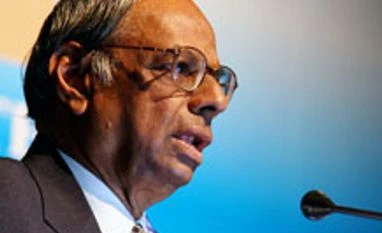 "Repo rate cut not enough, complementary actions needed: C Rangarajan")


 Connect with us on WhatsApp