Shadow banking crisis claims another victim; fin stocks a drag on Sensex

Financials have seen sharp erosion in their share prices in wake of the yearlong crisis in India's credit markets
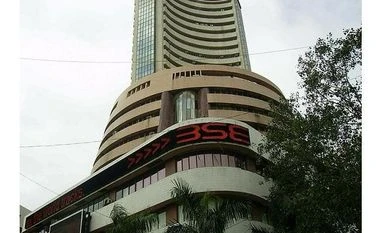
BSE, sensex
Ronojoy Mazumdar | Bloomberg
2 min read Last Updated : Oct 24 2019 | 8:01 AM IST
India’s unfolding shadow banking crisis has claimed another victim: the index-tracking funds investing in the nation’s stocks.

Financial stocks account for nearly half the value of benchmark S&P BSE Sensex and have been among the biggest drag on the gauge since it hit a peak in June. State Bank of India has been the biggest hindrance among stocks that have had the most negative influence, according to data compiled by Bloomberg.

“Most investors would welcome the idea of sector-specific caps,” said Gaurav Sinha, associate director for asset allocation at WisdomTree Investments in New York. “It’s a way to mitigate risks.” Wisdomtree’s $1.2 billion India Earnings Fund doesn’t allocate more than 30% to any one industry, he said.

Financials, whose weighting in the Sensex has more than doubled in the past decade, have seen sharp erosion in their share prices in wake of the yearlong crisis in India’s credit markets. Yes Bank Ltd. has slumped more than 70% this year, the worst performer on the gauge, and Indiabulls Housing Finance Ltd. was removed from the NSE Nifty 50 Index last month after the mortgage lender’s value more than halved.

Introducing a cap on sector weighting is an idea the National Stock Exchange of India Ltd. floated early this year, stirring a debate. Asia Index Pvt., a venture between BSE Ltd. and S&P Dow Jones Indices LLC, independently said sector-wise caps for benchmark gauges will hurt products linked to such indexes, in addition to increasing trading time and costs.


To be sure, most benchmark indexes globally don’t limit the influence of industry groups. Curbs could stop the indexes from reflecting the dynamics of the underlying economy, said Hemant Kanawala, head of equity investment at Kotak Mahindra Life Insurance Co.

“The risk is there, but artificial constraints may not be the right answer,” said Kanawala. “One way could be to change the index methodology; that would be less distortive and would still allow the market to decide.”


One subscription. Two world-class reads.

Already subscribed? Log in

Subscribe to read the full story →
*Subscribe to Business Standard digital and get complimentary access to The New York Times

Smart Quarterly

₹900

3 Months

₹300/Month

SAVE 25%

Smart Essential

₹2,700

1 Year

₹225/Month

SAVE 46%
*Complimentary New York Times access for the 2nd year will be given after 12 months

Super Saver

₹3,900

2 Years

₹162/Month

Subscribe

Renews automatically, cancel anytime

Here’s what’s included in our digital subscription plans

Exclusive premium stories online

  • Over 30 premium stories daily, handpicked by our editors

Complimentary Access to The New York Times

  • News, Games, Cooking, Audio, Wirecutter & The Athletic

Business Standard Epaper

  • Digital replica of our daily newspaper — with options to read, save, and share

Curated Newsletters

  • Insights on markets, finance, politics, tech, and more delivered to your inbox

Market Analysis & Investment Insights

  • In-depth market analysis & insights with access to The Smart Investor

Archives

  • Repository of articles and publications dating back to 1997

Ad-free Reading

  • Uninterrupted reading experience with no advertisements

Seamless Access Across All Devices

  • Access Business Standard across devices — mobile, tablet, or PC, via web or app

Topics :SensexNational Stock Exchangeshadow bankingIndian banking systemS&P BSE Sensex

Next Story



