Railways to try out new signalling system on Mathura-Vadodara stretch

This comes after the plan to revamp the entire signaling system for Rs 780 billion was red flagged by Prime Minister Narendra Modi in a review meeting on March 26
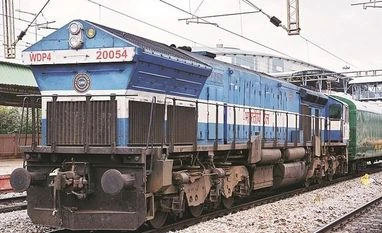
Diesel locomotives procured under the agreement would have no scope for productive utilisation in the Indian Railways network in future, CAG said
Shine Jacob New Delhi
Last Updated : Sep 22 2018 | 10:17 PM IST
The Indian Railways is set to revisit its signalling system overhaul plans by bringing in the European Train Control System (ETCS) level-2 technology in a phase-wise manner on busy routes. As part of this, the national transporter is set to take up a Rs 20-billion project to bring in the new signaling technology in the 850-kilo meter stretch between Mathura and Vadodara.

This comes after the plan to revamp the entire signaling system for Rs 780 billion was red flagged by Prime Minister Narendra Modi in a review meeting on March 26 citing the high project cost. Following this, the Railways was directed to bring the new signaling with automatic train protection system on busy routes first.

“The plan is to bring in level II of the ETCS technology in this new route. The first one that is already in place in Gatimaan involves placing balise, an electronic transponder on the rails that makes the interface possible. The level I technology requires devise on train as well as track. The next level is through automatic radio communication between train and the stations it touches,” said a government official.

Globally, companies that provide such technology include Siemens, Bombardier, Alstom, Ansaldo, STS, Memec Group and Thales. The Railways has already operationalised ETCS level 1 technology on 342 kilometers, which has technology that mitigates safety risk due to loco pilot’s error of signal passing at danger or over speeding.

Currently, it is implemented on 200 kilo meter stretch between Delhi and Agra, 117 km in Chennai Suburban section and 25 RKMs of Metro Railway, Kolkata. For the level-1, Ansaldo got the contract and the Railways may have to float a fresh tender if level-2 plan gets cleared. The level-2 technology will be having at least 30 per cent higher cost compared to the level-1 ETCS.

The Railways already has around 35 locomotives fixed with the same technology and in the new route, more such locomotives are likely to be introduced. It is set to take up the proposal with the Niti Aayog soon and may approach the Cabinet after that.

The level-2 technology will have electronic devices installed along tracks that will provide train signals to a computer fitted in the locomotive. 

Based on the technology, if a driver goes over the designated speed, a dashboard in front of him gives a red alert sign at first. Even after this, if the train continues its journey, the train's brake is automatically applied. 

On March 26, Modi had directed the railways to take heavy traffic routes initially and roll-out the technology across railways based on its success. 

The call for overhaul of the signalling system is in place for some time as Indian Railways is following the traditional signalling system introduced in 1893 covering 23 stations between Ghaziabad and Peshawar even now. 

What is ETCS Signalling?

It will be an automatic train protection (ATP) system based on European Train Control System (ETCS) technology widely used in major developed countries. The advantage of the system is that it helps reduce errors by loco pilots on signal passing and over speeding. European Train Control system is currently implemented on an experimental basis on 342 kms by the Indian Railways.

It is implemented on 200 kilometer stretch between Delhi and Agra, 117 km in Chennai Suburban section and 25 RKMs of Metro Railway, Kolkata.

One subscription. Two world-class reads.

Already subscribed? Log in

Subscribe to read the full story →
*Subscribe to Business Standard digital and get complimentary access to The New York Times

Smart Quarterly

₹900

3 Months

₹300/Month

SAVE 25%

Smart Essential

₹2,700

1 Year

₹225/Month

SAVE 46%
*Complimentary New York Times access for the 2nd year will be given after 12 months

Super Saver

₹3,900

2 Years

₹162/Month

Subscribe

Renews automatically, cancel anytime

Here’s what’s included in our digital subscription plans

Exclusive premium stories online

  • Over 30 premium stories daily, handpicked by our editors

Complimentary Access to The New York Times

  • News, Games, Cooking, Audio, Wirecutter & The Athletic

Business Standard Epaper

  • Digital replica of our daily newspaper — with options to read, save, and share

Curated Newsletters

  • Insights on markets, finance, politics, tech, and more delivered to your inbox

Market Analysis & Investment Insights

  • In-depth market analysis & insights with access to The Smart Investor

Archives

  • Repository of articles and publications dating back to 1997

Ad-free Reading

  • Uninterrupted reading experience with no advertisements

Seamless Access Across All Devices

  • Access Business Standard across devices — mobile, tablet, or PC, via web or app

Next Story



