Colleges win immigration battle, but haunted by fears for US reputation

Universities say the Trump administration's repeated attempts to curb immigration have sent students a message that they aren't welcome in the United States
harvard university, students, abroad, US universities, foreign, students
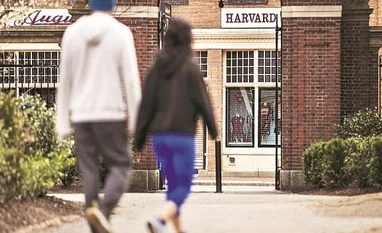
The loss of international students could have cost universities millions of dollars in tuition and jeopardised the ability of US companies to hire the highly skilled workers who often start their careers with an American education. Photo: Bloomberg
AP | PTI Washington
5 min read Last Updated : Jul 19 2020 | 6:47 PM IST
Even with a fresh victory on behalf of international students, US universities fear they're losing a broader fight over the nation's reputation as a place that embraces and fosters the world's best scholars.
 
University leaders see it as a steady erosion. They say the Trump administration's repeated attempts to curb immigration have sent students a message that they aren't welcome in the United States. Colleges say foreign students are listening: Since President Donald Trump was elected in 2016, the number of new international students coming to the US has fallen by 10 per cent after years of growth.
 
Already, there's concern that the coronavirus pandemic and a slowdown of visa processing could prevent thousands of students from returning this fall.
 
Foreign students now face even more uncertainty after seeing how quickly policies can change, and on nothing more than a political whim, said Kim Wilcox, chancellor of the University of California, Riverside.
 
“Higher education in the United States is still seen as the gold standard around the globe, but access to it comes with all kinds of risks,” Wilcox said. “There's a growing sense that we're just not a welcoming place.” Trump's latest policy would have forced international students in the US to transfer or leave the country if their schools held classes entirely online because of the pandemic. Even those at universities offering a mix of online and in-person classes would have been forbidden from taking all their classes online.
 
More than 200 colleges signed legal briefs supporting a federal lawsuit by Harvard University and the Massachusetts Institute of Technology. Seven other suits followed as colleges and states challenged the guidance. Called to court to defend the guidance, federal officials revoked it instead.
 
It was widely seen as part of Trump's recent campaign to pressure the nation's schools and colleges to reopen this fall, even as the coronavirus continues to surge.
 
But even in defeat, the policy fed a narrative that American universities are no longer the welcoming places they once were, said Denis Wirtz, vice provost for research at Johns Hopkins University.
 
It comes as schools in Canada, Australia and other nations push to attract more international scholars. Over time, Wirtz said, those countries may win the world's top talent.
 
It's painful for Wirtz to see. He came to the US from Belgium in 1988 and recalls how warmly he was welcomed. Now, he warns prospective students and researchers that, beyond campus borders, there's growing hostility toward immigrants.

“All those great scholars, wherever they are, India, China, Europe, may now elect to go elsewhere or simply to stay home,” he said. "We will see its effect four, five years from now. It's not falling off a cliff, but over time you have this creep down the slope toward mediocrity.” The concern is shared by leaders at other elite research universities. Only hours after the administration retreated from its policy, MIT's president published an op-ed warning that other countries “are working hard to attract students who have soured on the United States because of growing anti-immigrant hostility or bureaucratic roadblocks.” “Our competitors openly envy our capacity to welcome and adopt talent from everywhere. I fear lately that we will recognize this strategic US strength only once it is lost,” L Rafael Reif wrote.

There's also a looming fear that the administration will return with a revised rule, as it did after a 2017 travel ban faced legal challenges.
 
Hoping to ease nerves, dozens of colleges have issued statements pledging to support their international students, and many say they're prepared to return to court if needed.
 
Daniel Diermeier, chancellor of Vanderbilt University, said it isn't too late to repair the damage. America's higher education system is still viewed as the best in the world, he said, but that could change.
 
“We're going to have to fix this very quickly. We're going to have to recommit to the policy that has brought so much benefit to the the United States,” he said.
 
“Talent will go where it sees the best opportunity for itself.” US colleges already were bracing for sharp decreases in the number of students coming from abroad.
 
It's still to be seen how many will arrive this fall, but it's expected to be far below the nearly 1.1 million who came last year. The decline could devastate budgets at colleges that rely on tuition from foreign students, who typically pay higher rates.
 
But the impact extends far beyond budgets, Diermeier said. International students account for a major share of the nation's research force, he said, especially in science and engineering fields that attract fewer Americans.
 
They make significant contributions to the economy, and without them it would suffer, he said.
 
College leaders called the latest legal battle a significant victory that showed their power when they unite. But they already see other skirmishes on the horizon.

One subscription. Two world-class reads.

Already subscribed? Log in

Subscribe to read the full story →
*Subscribe to Business Standard digital and get complimentary access to The New York Times

Smart Quarterly

₹900

3 Months

₹300/Month

SAVE 25%

Smart Essential

₹2,700

1 Year

₹225/Month

SAVE 46%
*Complimentary New York Times access for the 2nd year will be given after 12 months

Super Saver

₹3,900

2 Years

₹162/Month

Subscribe

Renews automatically, cancel anytime

Here’s what’s included in our digital subscription plans

Exclusive premium stories online

  • Over 30 premium stories daily, handpicked by our editors

Complimentary Access to The New York Times

  • News, Games, Cooking, Audio, Wirecutter & The Athletic

Business Standard Epaper

  • Digital replica of our daily newspaper — with options to read, save, and share

Curated Newsletters

  • Insights on markets, finance, politics, tech, and more delivered to your inbox

Market Analysis & Investment Insights

  • In-depth market analysis & insights with access to The Smart Investor

Archives

  • Repository of articles and publications dating back to 1997

Ad-free Reading

  • Uninterrupted reading experience with no advertisements

Seamless Access Across All Devices

  • Access Business Standard across devices — mobile, tablet, or PC, via web or app

Topics :United StatesUS universitiesDonald TrumpUS VisasUS immigration policy

Next Story



