
Geomagnetic storm destroys 40 Starlink satellites, 'zero collision risk'
Dramatic visuals of the space debris are circulating on the internet of a satellite that "lived fast and died very young," astronomy news website Space.com reported.
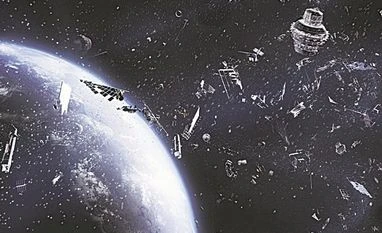 "Geomagnetic storm destroys 40 Starlink satellites, 'zero collision risk'")
WebinarsNew
Deep DiveNew
Explore Business Standard
Dramatic visuals of the space debris are circulating on the internet of a satellite that "lived fast and died very young," astronomy news website Space.com reported.
A geomagnetic storm has knocked 40 SpaceX satellites on February 4, after they were launched to a low deployment orbit, 130 miles above Earth.
Dramatic visuals of the space debris are circulating on the internet of a satellite that "lived fast and died very young," astronomy news website Space.com reported.
American aerospace manufacturer SpaceX has said the deorbiting satellites pose zero collision risk with other satellites and by design demise upon atmospheric reentry--meaning no orbital debris is created and no satellite parts hit the ground.
"On Thursday, February 3 at 1:13 p.m. EST, Falcon 9 launched 49 Starlink satellites to low Earth orbit from Launch Complex 39A (LC-39A) at Kennedy Space Center in Florida. Falcon 9's second stage deployed the satellites into their intended orbit, with a perigee of approximately 210 kilometers above Earth, and each satellite achieved controlled flight," the company said.
Furthering explaining the incident, the company said SpaceX deploys its satellites into these lower orbits so that in the very rare case any satellite does not pass initial system checkouts it will quickly be deorbited by atmospheric drag. "While the low deployment altitude requires more capable satellites at a considerable cost to us, it's the right thing to do to maintain a sustainable space environment."
The statement said the satellites deployed on Thursday were significantly impacted by a geomagnetic storm on Friday. "These storms cause the atmosphere to warm and atmospheric density at our low deployment altitudes to increase," it added.
According to the statement, preliminary analysis show the increased drag at the low altitudes prevented the satellites from leaving safe-mode to begin orbit raising maneuvers, and up to 40 of the satellites will reenter or already have reentered the Earth's atmosphere.
"The deorbiting satellites pose zero collision risk with other satellites and by design demise upon atmospheric reentry--meaning no orbital debris is created and no satellite parts hit the ground. This unique situation demonstrates the great lengths the Starlink team has gone to ensure the system is on the leading edge of on-orbit debris mitigation," the statement added.
(Only the headline and picture of this report may have been reworked by the Business Standard staff; the rest of the content is auto-generated from a syndicated feed.)
First Published: Feb 10 2022 | 10:34 AM IST


 Connect with us on WhatsApp