By Gabriela Baczynska
BRUSSELS (Reuters) - British and European Union negotiators sealed a Brexit deal on Thursday, just a week before the United Kingdom finally leaves the orbit of the 27-nation bloc, its biggest trading partner.
Here is what it means - in five basic questions.
WHAT IS BREXIT?
Brexit - or "British exit" - refers to the process of the United Kingdom leaving the EU after 47 years in the economic and political alliance of European countries built from the ashes of World War Two.
Following a referendum that the "vote leave" camp won by 52-48% in June 2016, Britain became the first country to leave the EU, a union of now nearly 450 million citizens that stretches from the Atlantic to the borders of Russia and Turkey.
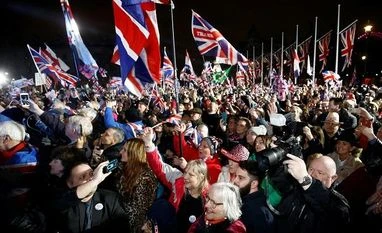
Britain's formal departure on Jan. 31, 2020 was heralded by supporters as a recovery of political sovereignty for the country of 66 million people.
Opponents saw it as an historic setback to European integration that could cause unprecedented economic damage and risk renewed strife on the Irish border, the only land frontier between the bloc and the UK.
Since its formal departure, London has followed established rules of close-knit cooperation on everything from trade to student exchanges, but this transition phase expires at midnight on Dec. 31.
WHAT DOES THE DEAL COVER?
The two sides have been in complex negotiations since March to try to keep their trade in goods flowing from Jan. 1, 2021.
The deal announced on Thursday means that this goods trade - roughly half of the $900 billion of annual EU-UK commerce - will remain free of tariffs and quotas.
However, goods moving between the UK and the EU will be subject to customs and other controls, and extra paperwork is expected to cause major disruptions.
The deal was negotiated on top of a formal Withdrawal Agreement reached last year, which ensured that extensive controls would not be put back on the sensitive border between EU member Ireland and the British province of Northern Ireland.
The third key element of the deal is dividing up fishing quotas between Britain and the EU.
WHICH OTHER AREAS ARE AFFECTED?
The deal does not envisage cooperation on the same level as before Brexit in many areas.
Financial and business services, the backbone of UK exports, are only included to a small extent.
The same is true of cooperation on foreign policy, security and defence, while provisions for transport, energy and civil nuclear cooperation will be below current levels.
WHICH OTHER TIES WILL BE DOWNGRADED?
Mobile roaming, mutual recognition of professional qualifications, access to legal services, digital trade and public procurement are other areas where cooperation will be downgraded.
While the EU and the UK agreed not to require visas for travel, free movement of people will end.
That means EU citizens going to the UK, and vice-versa, will be subject to border screening and no longer able to use biometric passports to cross swiftly through electronic gates.
IS BREXIT FINALLY DONE?
Yes, because Britain is out of the EU, its customs union and the single market, and no longer bound by their rules. Ties will now be based on the two sides' 2020 divorce settlement and the Trade and Cooperation Agreement sealed on Thursday.
But those hoping for an end to the often-acrimonious negotiations that followed the Brexit referendum are likely to be disappointed.
The agreement includes transition periods and review clauses, meaning that more negotiation lies ahead on fisheries, trading rules and much besides.
(Reporting by Gabriela Baczynska; Editing by John Chalmers, Giles Elgood and Kevin Liffey)

 "Here's UK and EU's Brexit trade deal explained with five basic questions")


 Connect with us on WhatsApp