iPhone maker Foxconn's India plant should draw lessons from the US

Wisconsin never hit its targets. And neither will Gujarat
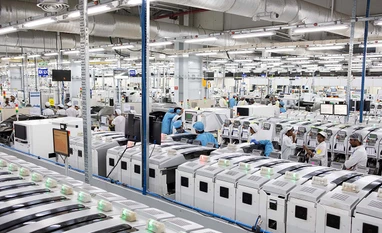
Foxconn
It’s inconceivable that Foxconn truly thought it would spend as much as $10 billion to build a high-tech manufacturing plant in the middle of US farm country. But, as founder and Chairman Terry Gou said early on in the planning phase: “There is such
Tim Culpan | Bloomberg
4 min read Last Updated : Sep 16 2022 | 7:46 AM IST
The project is fantastical: A $19 billion investment into semiconductor and display-panel sectors, with the creation of 100,000 jobs in a state with little experience in technology manufacturing.
 
If voters and taxpayers in India’s northwestern Gujarat state are excited about this “ landmark investment” they ought to read up on recent Wisconsin history. The US state bought into a similar pipe dream in 2017 when then-President Donald Trump teamed up with then-Governor Scott Walker to lure Foxconn Technology Group, whose Taipei-listed flagship is  Hon Hai Precision Industry Co.  The Taiwanese company said it’d invest $10 billion and hire 13,000 workers.

Wisconsin never hit its targets. And neither will Gujarat. 

What’s playing out today in India is eerily similar to what happened in the US Midwest five years ago, but this time the people and government of Gujarat have no excuse for not being aware of what’s likely to unravel. Americans were told clearly that the project in Mount Pleasant didn’t make sense. But still, they went ahead.

It’s inconceivable that Foxconn truly thought it would spend as much as $10 billion to build a high-tech manufacturing plant in the middle of US farm country. But, as founder and Chairman Terry Gou said early on in the planning phase: “There is such a plan, but it is not a promise. It is a wish.”

So when Vedanta Ltd. chairman Anil Agarwal says his company will invest 1.54 trillion rupees ($19.4 billion), we ought to take it as wishful thinking,  rather than a promise. And we can also pause to bathe in the sweet irony of his chosen venture partner: Foxconn, the same name behind the Wisconsin project. Though, to be fair, the Taiwanese are less a driving force behind this India project and more a consulting partner. The numbers, choice of location, and project scope are mostly decided by Vedanta, which is bearing most of the financial burden. 

Foxconn made various pledges in Wisconsin that never came to fruition, with a promise for a state-of-the-art 10G liquid-crystal-display panel factory being the most egregious. At least it never committed to assembling iPhones, the product for which Foxconn is most famous.

The Taiwanese company’s perfidiousness was in some respects spurred by local and national governments intent on selling to their voters (and taxpayers) the assurance that a $3 billion incentives package — the largest in US history — would be worth the expense. It will be the “Eighth Wonder of the The World,” Trump proclaimed at the groundbreaking ceremony in 2018. 

Governments from Washington to New Delhi don’t want to offer corporate welfare to lure hum-drum projects like chip-testing and assembly. They want to send press releases and tweets that hail their territory’s move into the upper echelons of industrial society. To meet that PR goal, they often tie incentives not to reasonable evolutionary steps in economic development, but to extravagant plans that people never dreamed of. 

And the recipients of such sweeteners are more than happy to oblige, safe in the knowledge that there’s almost no downside in overpromising and under-delivering. And those who doled them out — either long gone from office, or safely entrenched — won’t be required to foot the bill either. Scott Walker lost his re-election bid, in large part because of the failure of the Foxconn deal; however, he didn’t lose his home like dozens of Wisconsinites who were displaced to make way for the “wonder” that never was.

Now it’s India’s turn to dream, until such time comes that it must face reality.

Perhaps it’s a coincidence that the project went to the home state of Prime Minister Narendra Modi. Neighboring Maharashtra state thought it was a shoe-in for the deal, going so far as to issue a statement two months ago announcing that the Vedanta-Foxconn venture would invest there.

Accusations and rancor were flying thick and fast in Maharashtra after Agarwal and Modi took to the stage to celebrate the winner. But in reality, the people of India’s second most-populous state may end up celebrating not that they lost the project, but that they dodged a bullet. 

Indians — in Gujarat and Maharashtra in particular — can take this as a warning: You don’t want to be another Wisconsin.

To contact the author of this story:
Tim Culpan at tculpan1@bloomberg.net

One subscription. Two world-class reads.

Already subscribed? Log in

Subscribe to read the full story →
*Subscribe to Business Standard digital and get complimentary access to The New York Times

Smart Quarterly

₹900

3 Months

₹300/Month

SAVE 25%

Smart Essential

₹2,700

1 Year

₹225/Month

SAVE 46%
*Complimentary New York Times access for the 2nd year will be given after 12 months

Super Saver

₹3,900

2 Years

₹162/Month

Subscribe

Renews automatically, cancel anytime

Here’s what’s included in our digital subscription plans

Exclusive premium stories online

  • Over 30 premium stories daily, handpicked by our editors

Complimentary Access to The New York Times

  • News, Games, Cooking, Audio, Wirecutter & The Athletic

Business Standard Epaper

  • Digital replica of our daily newspaper — with options to read, save, and share

Curated Newsletters

  • Insights on markets, finance, politics, tech, and more delivered to your inbox

Market Analysis & Investment Insights

  • In-depth market analysis & insights with access to The Smart Investor

Archives

  • Repository of articles and publications dating back to 1997

Ad-free Reading

  • Uninterrupted reading experience with no advertisements

Seamless Access Across All Devices

  • Access Business Standard across devices — mobile, tablet, or PC, via web or app

Topics :iPhonesFoxconnsemiconductorsemiconductor industrywisconsinUnited States

Next Story



