
Qantas says Australia virus travel curbs cost it $71 mn in quarterly profit
The airline is running less than 30% of its normal domestic capacity due to border closures
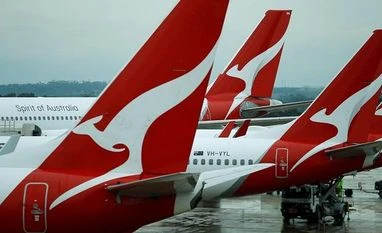 "Qantas says Australia virus travel curbs cost it $71 mn in quarterly profit")
Explore Business Standard
The airline is running less than 30% of its normal domestic capacity due to border closures
By Jamie Freed
SYDNEY (Reuters) - Qantas Airways Ltd said on Friday that Australian state border closures due to the coronavirus pandemic had cost it A$100 million ($71 million) in earnings in the first quarter and would have a negative impact in the second quarter as well.
The airline is running less than 30% of its normal domestic capacity due to border closures, having earlier expected to be operating around 60% at this time, Qantas Chief Executive Alan Joyce said in a speech at the airline's annual meeting of shareholders.
"Essentially, this is a timing issue," he said. "We know the upswing will materialise - just later than planned."
Joyce said if Queensland opened its borders to the country's most populous state, New South Wales, domestic capacity could reach up to 50% by Christmas.
The airline could report positive net free cashflow in the second half if all state borders opened with the possible exception of Western Australia, he said.
In New Zealand, where there are no domestic border curbs, Air New Zealand Ltd is operating nearly 85% of its pre-pandemic capacity.
Qantas has grounded almost all of its international flights and said on Friday around 18,000 employees remain stood down receiving government benefits rather than their usual pay.
Chairman Richard Goyder said there were some positive signs around "travel bubbles", starting with New Zealand, that could result in it flying to destinations it did not serve before COVID-19, such as South Korea, Taiwan and various Pacific islands.
The airline is on track to meet its target of A$1 billion a year of ongoing annual cost savings from the 2023 financial year, Joyce said, with A$600 million of that to be unlocked this financial year, ending June 30, 2021.
He added Qantas would seek to match any concessions agreed by unions for rival Virgin Australia under its new owner Bain Capital.
Qantas has previously announced plans to cut 8,500 jobs, or nearly 30% of its pre-pandemic workforce.
($1 = 1.4033 Australian dollars)
(Reporting by Jamie Freed; Editing by Jacqueline Wong and Kenneth Maxwell)
(Only the headline and picture of this report may have been reworked by the Business Standard staff; the rest of the content is auto-generated from a syndicated feed.)
First Published: Oct 23 2020 | 9:02 AM IST

