US Fed holds rates at zero, projects two hikes by the end of 2023

"Progress on vaccinations has reduced the spread of Covid-19 in the United States," the Federal Open Market Committee said in a statement released Wednesday
Federal Reserve
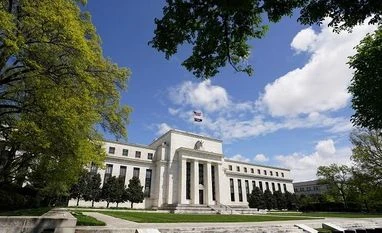
The Federal Reserve building in Washington DC. Photo: Reuters
Matthew Boesler | Bloomberg
3 min read Last Updated : Jun 16 2021 | 11:57 PM IST
Federal Reserve officials held interest rates near zero but signaled they expect two increases by the end of 2023, pulling forward the date of liftoff as the economy recovers.

“Progress on vaccinations has reduced the spread of Covid-19 in the United States,” the Federal Open Market Committee said in a statement released Wednesday following the conclusion of its two-day policy meeting. “Amid this progress and strong policy support, indicators of economic activity and employment have strengthened.”
 
The central bank held the target range for its benchmark policy rate unchanged at zero to 0.25% -- where it’s been since March 2020 -- and pledged to continue asset purchases at a $120 billion monthly pace until “substantial further progress” had been made on employment and inflation.
 
The quarterly projections showed 13 of 18 officials favored at least one rate increase by the end of 2023, versus seven in March. Eleven officials saw at least two hikes by the end of that year. In addition, seven of them saw a move as early as 2022, up from four.
 
The dollar rose, stocks declined and yields on 10-year Treasuries jumped following the news.
 
The FOMC vote was unanimous. Chair Jerome Powell will hold a virtual press conference at 2:30 p.m. Washington time.
 
The US economic recovery is gathering strength as business restrictions lift and social activity increases across the country.

Robust demand from consumers and businesses alike has outstripped capacity, leading to bottlenecks in the supply chain, longer lead times and higher prices. At the same time, employment growth has disappointed over the past couple of months.
 
Fed officials have said such “fits and starts” are to be expected given the unprecedented nature of the pandemic and expressed optimism about the outlook for the second half of the year as more Americans get vaccinated.
 
Labor Department reports on employment published since the last gathering of the US central bank’s policy-setting Federal Open Market Committee in late April have disappointed relative to forecasters’ expectations. The US unemployment rate was still elevated at 5.8% in May, with total employment still millions of jobs below pre-pandemic levels.
 
Consumer-price pressures, on the other hand, have proven hotter than expected. Labor Department figures showed a 0.8% jump in prices in April and a 0.6% rise in May, marking the two biggest monthly increases since 2009.
 

One subscription. Two world-class reads.

Already subscribed? Log in

Subscribe to read the full story →
*Subscribe to Business Standard digital and get complimentary access to The New York Times

Smart Quarterly

₹900

3 Months

₹300/Month

SAVE 25%

Smart Essential

₹2,700

1 Year

₹225/Month

SAVE 46%
*Complimentary New York Times access for the 2nd year will be given after 12 months

Super Saver

₹3,900

2 Years

₹162/Month

Subscribe

Renews automatically, cancel anytime

Here’s what’s included in our digital subscription plans

Exclusive premium stories online

  • Over 30 premium stories daily, handpicked by our editors

Complimentary Access to The New York Times

  • News, Games, Cooking, Audio, Wirecutter & The Athletic

Business Standard Epaper

  • Digital replica of our daily newspaper — with options to read, save, and share

Curated Newsletters

  • Insights on markets, finance, politics, tech, and more delivered to your inbox

Market Analysis & Investment Insights

  • In-depth market analysis & insights with access to The Smart Investor

Archives

  • Repository of articles and publications dating back to 1997

Ad-free Reading

  • Uninterrupted reading experience with no advertisements

Seamless Access Across All Devices

  • Access Business Standard across devices — mobile, tablet, or PC, via web or app

Topics :CoronavirusInflationUS Federal ReserveUnited StatesInterest RatesUS economyeconomic growthEconomic recoveryEmploymentJerome Powell

Next Story



