India’s 10-year bond yield fell 12 basis points (bps) on domestic rate cut hopes as global central banks lowered their key rates to stave off an economic slowdown caused by the coronavirus outbreak.
Reserve Bank of India (RBI) Governor Shaktikanta Das told Bloomberg in an interview on Tuesday that the central bank was ready to do whatever was needed to address a slowdown.
“We’re ready for a response should the situation warrant,” Das said in the interview. “And going forward, in the near future, I do expect some discussion through video conference or telephone conference among the central banks of the large economies, including India.”
In the case of India, options include a rate cut and supporting the market through liquidity measures, the governor told the news agency.
The 10-year bond yield closed at 6.227 per cent, lowest since December 6, 2016, while the five-year bond yield fell 14 bps.
Taking cues from the equity indices, the rupee also recovered from its intraday low of 73.64 a dollar to close at 73.23 a dollar.
The RBI largely stayed away from the market, while the arbitrage opportunity between offshore and onshore markets in rupee shrank. The US Federal Reserve reduced its policy rate by 50 bps, pulling down the 10-year US treasury note to below 1 per cent for the first time ever.
Following the US rate cut, Australia and Malaysia also reduced their policy rates. South Korea unveiled a $9.8-billion stimulus package to fight coronavirus-led slowdown. Hong Kong and Singapore have already resorted to helicopter drops of money to customers to stimulate demand.
The market is now convinced that there will be a rate cut, possibly before the next monetary policy committee (MPC) meet scheduled in early April. The MPC can meet out of turn if required and resolve to cut rates.
“It now is a matter of when, rather than if, a rate cut would happen,” said Ashok Gautam, executive director and head of treasury at IDBI Bank. “The RBI in the past has taken unconventional measures to ensure adequate liquidity and credit flows, and those have started showing desired effect,” Gautam said.
According to Rahul Bajoria, chief India economist at Barclays, those measures are certainly having a material effect on easing financial conditions, “though their end impact on overall credit availability is still unknown”.
As sovereign bond yields drop, companies are seeing lower borrowing costs amid falling global yields, Bajoria wrote in his report.
On an immediate basis, the RBI can continue with its long-term repo operations (LTRO) beyond the Rs 1 trillion it had planned. The central bank is left with only Rs 25,000 crore of LTRO operations. “Hopefully, there could be further tranches,” Gautam said.
Among other measures, there could be more relief on cash reserve ratio and risk weight adjustments on loans, according to Soumyajit Niyogi, associate director at India Ratings and Research.
However, it is unlikely that the RBI would want to rush into a decisive action. “Advanced economies and their financial system have now been seasoned with the extremely low and volatile interest rate regime. In the case of India, it is not the case, moreover average inflation is higher than the target, and that has become more unpredictable with the black swan event,” said Niyogi. “For India, the risk of stability in the financial system is paramount amid rising scope of capital flight and subsequent impact on the currency. Additionally India’s leverage consumption and interest rate elasticity of demand is quite low.”
Therefore, the reaction from the RBI is expected to be in a staggered manner while ensuring adequate buffer in the financial system by putting more shock absorbers, and a token cut for signaling effect, according to Niyogi.

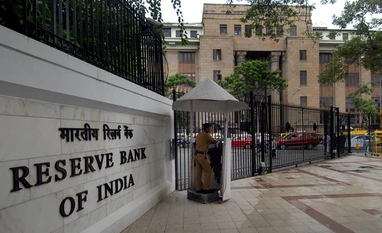 "10-yr bond yields at 39-month low as markets brace for RBI action")











