Scrapping currency can't deliver corruption-free India: Chinese media
China has also launched a streak of anti-graft measures, while punishing over 1 mn corrupt officials in the past 3 years
IANS Beijing India's decision to demonetise Rs 500 and Rs 1,000 currency notes was "bold and decisive" but the "risky" move is far from delivering a corruption-free country, the Chinese media said on Monday.
However, the op-ed in the Global Times hailed Prime Minister Narendra Modi for his "startling and sudden move", which has created a mayhem-like situation in India causing great inconvenience to millions who could be seen waiting endlessly in the long and winding queues to get old currency exchanged in the banks.
"The new policy to scrap India's two largest denomination rupee notes is considered a risky, but a bold and decisive step. And yet, delivering a corruption-free country requires more than banning currency notes." the daily said.
"Modi means well and his decision was made based on the reality in India, since most illegal business in the underground economy is cash-only and Rs 500 and Rs 1,000 notes constitute over 80 percent of all cash circulation in India. Nevertheless, we can hardly count on the new rule to fully root out corruption," the write-up authored by Ai Jun said.
According to the opinion piece, although Prime Minister Narendra Modi has taken a number of steps to end corruption, those measures "are without teeth and can't scratch the surface of the problem".
"More time is needed to see whether Modi's new policy will turn into a huge blow against corruption in India. The hard truth is that the corrupt and fraudulent won't just conduct shady deals by using cash, but with gold, real estate and overseas assets. Corruption can be bred in a variety of ways. Blocking the circulation of large currency bills is without question far from enough," the commentary argued.
It said the key to weed out corruption was reforming the system.
The daily even advised India to take a cue from China in battling corruption as its method had shown efficacy.
"Over the years, China promoted anti-corruption laws, improved the supervision system, deepened judicial system reforms and adopted measures to make sure the system is transparent."
For instance, China's foreign ministry has lately published information about the families of 12 senior officials on its website in an effort to fight against corruption through familial networks by improving transparency," it added.
According to the Chinese government, over 1 million officials have been punished for corruption in the past three years, which it says, is the result of President Xi Jinping's anti-graft drive.

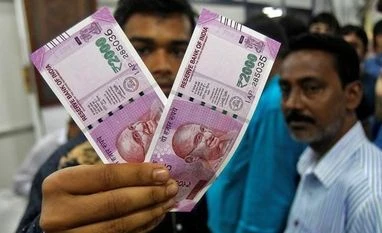 "Scrapping currency can't deliver corruption-free India: Chinese media")


 Connect with us on WhatsApp