China’s best-known businessman, Jack Ma, has named his successor at Alibaba, the giant e-commerce firm that he co-founded. The 54-year old Mr Ma, who will step down as executive chairman in 12 months, is almost synonymous with Asia’s most valuable company, and is something of an icon in his home country. He has said that he intends to focus on philanthropy, particularly in the education sector in emulation of Microsoft’s Bill Gates. In fact, his charitable foundation is already China’s largest, funded by share options worth about two per cent of Alibaba. Mr Ma, an English teacher and the child of two tellers of traditional musical folktales, has often described himself as an “accidental” businessman. However, his announcement will not end speculation about his future or that of his $400-billion company; it will in fact further deepen it.
Mr Ma is the first of the founding generation of China’s new private-sector giants to declare such a personal transition. His example and how Alibaba moves on after he gives up the reins will set an unavoidable precedent for a corporate culture that has little or no institutional heritage to call on to manage such affairs. Thus the transition process will have an impact even larger than otherwise. The question is whether in China’s personality-driven economy, the company will manage to thrive after Mr Ma’s exit from active management — or even if the co-founder himself will be forced to retain control in some indirect way. Of course, Mr Ma will remain Alibaba’s most influential shareholder — he exerts disproportionate control over the company thanks to dual-class shares. Alibaba itself has a strong and largely admired leadership team even without Mr Ma, who stepped down as CEO in 2013 while staying as executive chairman. The ownership structure, with 36 partners in control, is controversial but Mr Ma has argued that it provides stability at times like these — an argument ironically similar to that made about the collective control that defined Beijing in the era before Mr Xi. The company is of course no longer just in e-commerce — it has ventured into cloud computing and digital payments and is a big investor, including in the Indian economy. It’s clear that Alibaba has the best chance of most Chinese companies to work out a sensible succession. If so, Mr Ma’s example will be a big positive for the Chinese private sector going forward.

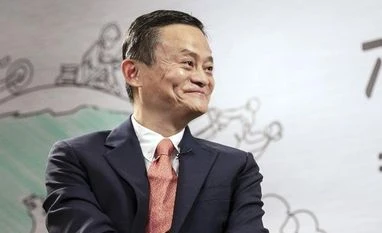 "What after Jack Ma? Succession plan deepens speculation on Alibaba's future")












 Connect with us on WhatsApp