Budget 2018: Digital India needs a big step up

The Budget's focus on inclusivity is expected to translate into an increase in domestic demand accompanied and driven by technology
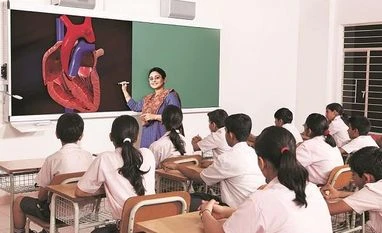
digital India, education, classroom, teacher, students
The goal of moving from blackboard to digital board by 2022 is aggressive but achievable
R Chandrashekhar
Last Updated : Feb 07 2018 | 5:58 AM IST
One gets the impression that Budget 2018 is pragmatic and seeks to further consolidate the process of formalisation of the economy combined with a special emphasis on the rural sector, while maintaining fiscal discipline. The focus on facilitating better health care services, agricultural support and quality education is commendable. Considering the farm sector has been under stress and that Prime Minister Modi envisions a doubling of sectoral income by 2022, a move in this direction was in many ways expected. But it is noteworthy that the government chose the route of structural changes and not yield to the temptation of sops and doles. Given the repeated references to technology, it can be taken as a given that the strategy in all these areas would be heavily reliant on technology, providing opportunities for the IT-BPM sector in the domestic market.


A 7.2-7.5 per cent, GDP growth projection augurs well and charts a course to an 8 per cent-plus growth in the near future. Though the increased focus on “Make in India” was evident it would have been encouraging to see more specific initiatives aimed at fostering innovation and encouraging investments. Having said that, the sustained digitisation drive (Aadhaar, direct benefit transfer) combined with digital financial inclusion are huge positives with long-term benefits which will be even greater than what is visible today. Once again, to establish linkages with the avowed rural focus, start-ups would do well to seize the opportunity to particularly infuse tech (ICT) and participate in rural India’s growth narrative. 

The goal of moving from blackboard to digital board by 2022 is aggressive but achievable
The Ease of Living goal — undoubtedly, an innovative citizen-oriented approach — will inevitably entail and spur greater use and deployment of tech. More specifically, the goal of moving from blackboard to digital board by 2022 is aggressive but achievable while the mention of an expansive programme to equip teachers to power this transition, reflects pragmatism. 


The announcement of direct efforts to promote development and use of AI is timely. The emphasis on wider use of block chain technology and delinking it from specific crypto-currencies shows wisdom and discernment. We are hopeful that these announcements will be backed by adequate budgetary allocations coupled with extensive involvement of the private sector, academia and research institutions. Yet again, the doubling of the Digital India programme allocation to Rs 30.73 billion, the 100 billion Bharatnet project including 500,000 Wifi hotspots in rural areas are big propellers but may require substantial step-up and an emphasis on implementation to have the desired impact and scale. Similarly, the encouragement to indigenous development of 5G technologies in institutions like IIT-M is indeed welcome but needs to be complemented by concrete steps to promote accelerated rollout of the 5G infrastructure.

Towards incentivising employment (the need of the hour, unarguably), fixed-term employment has been extended to all sectors and employees’ (for females) Provident Fund contribution has been brought down to 8 per cent for the first three years. In health care, the flagship National Health Policy with emphasis on universal health coverage and preventive care is commendable but we expect significant emphasis on tech in implementation to achieve the objectives of universal coverage, access and affordability. There is a consensus among health care providers as well as IT industry leaders that in India, universal health care and pervasive preventive measures cannot be achieved without extensive and systematic deployment of technology.

The focus on inclusivity, rural areas, farm incomes is welcome and could be expected to translate into an increase in domestic demand accompanied and driven by technology.

The author is president, Nasscom

One subscription. Two world-class reads.

Already subscribed? Log in

Subscribe to read the full story →
*Subscribe to Business Standard digital and get complimentary access to The New York Times

Smart Quarterly

₹900

3 Months

₹300/Month

SAVE 25%

Smart Essential

₹2,700

1 Year

₹225/Month

SAVE 46%
*Complimentary New York Times access for the 2nd year will be given after 12 months

Super Saver

₹3,900

2 Years

₹162/Month

Subscribe

Renews automatically, cancel anytime

Here’s what’s included in our digital subscription plans

Exclusive premium stories online

  • Over 30 premium stories daily, handpicked by our editors

Complimentary Access to The New York Times

  • News, Games, Cooking, Audio, Wirecutter & The Athletic

Business Standard Epaper

  • Digital replica of our daily newspaper — with options to read, save, and share

Curated Newsletters

  • Insights on markets, finance, politics, tech, and more delivered to your inbox

Market Analysis & Investment Insights

  • In-depth market analysis & insights with access to The Smart Investor

Archives

  • Repository of articles and publications dating back to 1997

Ad-free Reading

  • Uninterrupted reading experience with no advertisements

Seamless Access Across All Devices

  • Access Business Standard across devices — mobile, tablet, or PC, via web or app

More From This Section

Disclaimer: These are personal views of the writer. They do not necessarily reflect the opinion of www.business-standard.com or the Business Standard newspaper
Next Story



