Can economics be of the people, for the people and by the people?

Sound theories are essential as they provide stable base for policymaking, but the process is too long-drawn and takes away objectivity
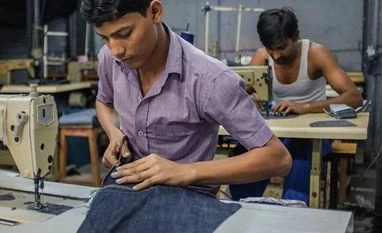
Textile industry, employment, jobs, economy
Photo: Shutterstock
Joydeep Ghosh
3 min read Last Updated : Oct 17 2019 | 2:47 PM IST
Abhijeet Banerjee, Esther Duflo and Michael Kremer’s Nobel Prize for ‘randomised control trials’ or RCTs brought back fond memories of our Masters in Gokhale Institute of Politics and Economics. Professor P Venkatramaiah, who was teaching development economics and had done seminal work on input output economics, started with: “I don’t know what to teach you. My theories on development economics stand challenged.” He went on to teach us ‘game theory’ for which Nash, Selten and Harsanyi had won the Nobel Prize in 1994. A sidelight: He would prompt us to negotiate when we disagreed with our marks given in our weekly exams. Mostly, we lost. 

But the interesting thing after the announcement of the Nobel Prize 2019, there was a lot of replugging of articles written by people who disagreed with the RCT and the results it produced. As the saying goes, if you put two economists in a room, you will get two opinions, unless one of them is Lord Keynes, in which case you would get three opinions.

Disagreeing is fine. But it is good that economics and economists are being viewed from a practical angle. Sure, some subjects need vast canvases, many don’t. For example, privatisation of hospitals could require a broader analysis in the context of the implementation of Ayushman Bharat, but providing vegetarian or non-vegetarian food to students is more likely to be area-specific – small and manageable problems, as they are called.

In that context, Banerjee’s role in ideating the Nyay programme – giving 72,000 a year to the poorest (Rs 6,000 a month) – was a prominent election plank for the Congress. All and sundry criticised that it will mean higher taxes for corporates and high networth individuals. Well, the latter has already happened, and the corporate sector got relief only after the economic growth rate started faltering.

While the government has taken some baby steps towards tackling consumption demand such as increasing the dearness allowance for 11 million central government officials by 5 per cent, would something like a Nyay have boosted consumption demand, especially in rural areas? We don’t know that.
 
What we know is that Telangana Chief Minister K Chandrashekhar Rao’s Rythu Bandhu scheme, which provides Rs 5,000 per acre per season has been a huge success. It has boosted consumption, and the state is one of the top ones in goods and services tax collections and needs minor or no compensation from the centre. So, money at the hands of the people is working. And KCR is a winner, politically.   

If Congress really wants to show to people that it was serious about Banerjee’s proposal on Nyay, it should implement it in the five states – Punjab, Rajasthan, Madhya Pradesh, Chhatisgarh and Puducherry - in which it is in power. Yes, resource is a question. But state government can raise money through bonds, and if consumption is revived, tax collections follow. It can also be targeted and done in phases.

This would strengthen the view that like democracy, economics can be of the people, for the people and by the people.
Twitter: @joyghosh2

One subscription. Two world-class reads.

Already subscribed? Log in

Subscribe to read the full story →
*Subscribe to Business Standard digital and get complimentary access to The New York Times

Smart Quarterly

₹900

3 Months

₹300/Month

SAVE 25%

Smart Essential

₹2,700

1 Year

₹225/Month

SAVE 46%
*Complimentary New York Times access for the 2nd year will be given after 12 months

Super Saver

₹3,900

2 Years

₹162/Month

Subscribe

Renews automatically, cancel anytime

Here’s what’s included in our digital subscription plans

Exclusive premium stories online

  • Over 30 premium stories daily, handpicked by our editors

Complimentary Access to The New York Times

  • News, Games, Cooking, Audio, Wirecutter & The Athletic

Business Standard Epaper

  • Digital replica of our daily newspaper — with options to read, save, and share

Curated Newsletters

  • Insights on markets, finance, politics, tech, and more delivered to your inbox

Market Analysis & Investment Insights

  • In-depth market analysis & insights with access to The Smart Investor

Archives

  • Repository of articles and publications dating back to 1997

Ad-free Reading

  • Uninterrupted reading experience with no advertisements

Seamless Access Across All Devices

  • Access Business Standard across devices — mobile, tablet, or PC, via web or app

Topics :Abhijit Banerjeeeconomics

Next Story


