As the government staggers from one corruption-related scandal to another, I am reminded of the title of an article I read some years ago, which characterised India as "a flailing state". The epithet seems increasingly appropriate. It certainly applies to the economic policies of recent years which have ensured the collapse of economic growth from 9.3 per cent in 2010-11 to five per cent in 2012-13, the yawning external imbalance with the current account deficit (CAD) officially expected to exceed five per cent of GDP in 2012-13 and consumer price inflation in double digits for the fourth successive year.
Faced by such ugly official data, the government's response - from the prime minister down - has been to speak soothingly about the worst being behind us and predict a return to eight per cent economic growth in three years and a reduction of the CAD to 2.5 per cent of GDP in a similar period. For this year, 2013-14, the finance ministry projects (via the Economic Survey, 2012-13) a growth revival to 6.1-6.7 per cent, a prediction dutifully reflected by last fortnight's 'Review of the Economy, 2012-13' by the Prime Minister's Economic Advisory Council (PMEAC) which foresees GDP growth of 6.4 per cent. The Reserve Bank (RBI), perhaps the most professional of extant official economic agencies, offered a more bearish forecast of 5.7 per cent in its Monetary Policy Statement, 2013-14 last week.
What is one to make of all this? Will economic growth recover fairly soon as the finance ministry and PMEAC project? Or more slowly as forecast by the RBI? What will bring about the growth revival? Can the record high external imbalance (CAD) be halved within three years? What is the outlook for inflation? The search for answers must begin with a better understanding of what brought about the extraordinary deceleration of India's growth in the last two years. It wasn't the rate of aggregate investment in the economy, which remained at a surprisingly robust 35 per cent of GDP even in 2012-13. There was some worsening of the global economic environment but nothing comparable to the global crisis and recession of 2007-09, which the Indian economy withstood remarkably well. Yes, some medium-term factors were at work, such as the prolonged absence of productivity-enhancing reforms and a slowing of services sector growth after many years of rapid expansion. But these do not explain the collapse of growth within two short years.
A more probable cause is the onset of major supply-side constraints that have bedevilled the Indian economy from 2010 onwards, including: the sudden tightening of environmental regulations (including stalling of completed projects like the Lavasa township, the Mundra port in Gujarat and the Vedanta mining enterprise in Orissa); the eruption of serious scams in the Commonwealth Games, 2G telecom spectrum auction and coal block allocations and their debilitating aftermaths for the impacted sectors; the sweeping judicial restraints on iron ore mining in Karnataka and Goa; the fiasco of missing fuel supply (coal and gas) for many thousands of megawatts of newly completed power projects; and the generalised "policy paralysis" and governance lacunae in regard to activation, completion and clearances of major core sector projects. In effect, these factors, taken together, dealt the Indian economy a serious (and still enduring) domestic supply shock in 2010-12, which was majorly responsible for the collapse of economic growth in the last two years. As the PMEAC report puts it, "projects with large sums of money invested in them were not getting completed and therefore not yielding the expected current output".
If this broad diagnosis is accepted, then several implications follow for the appropriate sequencing of corrective policy. First, further loosening of monetary policy will not help significantly to restore growth. It will simply fuel inflation and inflationary expectations, which are still running in double digits (as the RBI's recent policy statement concedes), if one focuses on the broad consumer price index (CPI) - as one should, now that we have one. In an economy with over 60 per cent of income generation and spending accounted for by services, the CPI is surely to be preferred to the WPI, which omits services items. Reducing policy rates against the background of a record high CAD is also surely anomalous. Even if such reduction induced higher investment (highly unlikely in the present environment), that would simply aggravate the domestic savings-investment gap and the CAD. Lower policy rates would also damp the flow of financial savings which have dropped markedly in the last two years.
Second, more expansionary fiscal policy would also be counter-productive. For at least three of the last five years our fiscal and revenue deficits have been running way too high, sustaining high levels of inflation, reducing government and domestic savings and exacerbating the massive external imbalance. As I have pointed out ('BoP: Zero Dark Thirteen?', Business Standard, March 14, 2013) the recent Union Budget does little to reduce the CAD through higher government savings. What we need on the fiscal front is lower fiscal and revenue deficits and a shift in the composition of government expenditures away from subsidies and entitlement programmes and towards "last mile" public investments.
Third, and above all, the first priority for policy must be to blunt the prevailing supply shock through administrative and coordination measures, which activate production from idled projects (fuel-starved power plants) and mines (iron ore and coal) and focus on completing major stalled projects in public and private sectors. The Cabinet Committee on Investment was established to secure this goal and the jury is still out on its effectiveness in the current fractious political climate. If the administrative/regulatory/judicial logjam can be loosened, there could be a quick yield in higher output, which would have multiplier constraint-loosening effects on the economy as well as lead to higher savings, a critical prerequisite for reducing the domestic savings-gap and thus help reduced the unsustainably high CAD.
That brings us back to India's short-term outlook for growth revival. What are the prospects for doing the right things effectively in the present environment of disappointingly weak governance, fiercely partisan politics and uncertain coordination across key economic agencies and ministries? Not too bright, I would say. Add to that the available facts on the economy's trajectory. There is no significant evidence of the much hoped for turnaround or "green shoots". On the contrary, there are several signs that growth could slow further in the near term. So, with a little optimism, we could hope for growth in the five-to-six per cent range in 2013-14. At this juncture, reverting to eight per cent growth in three years looks like a distant mirage. And who knows whether even the five-to-six per cent can be sustained if our high external vulnerability is hit by shortages of foreign capital inflows.
The writer is Honorary Professor at Icrier and former Chief Economic Adviser to the Government of India.
These views are his own

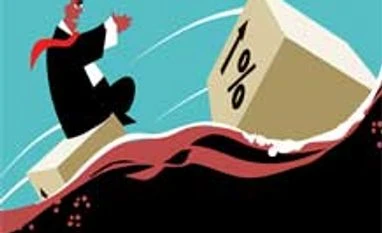 "Early exit from economic stress?")


 Connect with us on WhatsApp