Eight years on

India must protect macroeconomic stability
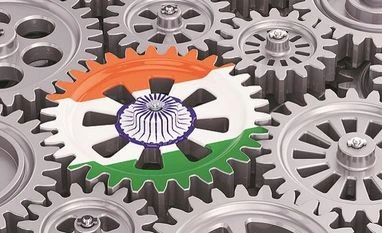
Indian economy, reforms, policy, manufacturing, make in india
Business Standard Editorial Comment Mumbai
3 min read Last Updated : May 23 2022 | 10:04 PM IST
Is this finally India’s moment? As the country emerges from the pandemic, poised to once again take over the mantle of the world’s fastest-growing large economy, it is reasonable to consider where it stands almost eight years after Prime Minister Narendra Modi took office on May 26, 2014. At that point, Jim O’Neill — the Goldman Sachs banker who famously coined the “BRIC” acronym — declared that it was the “most positive development in India in 30 years”. Stock markets surged, and a fortunate moderation in global oil prices helped tame inflation and stabilise the economy. Eight years on, the global environment may not be as supportive. But significant changes to India’s economic base may have provided a platform for growth in the coming years.

The government has focused on infrastructure investment in both good times and bad, sharply increasing the pace of highway construction. There is a public commitment to renewable energy, which creates the possibility of greener growth. And the telecommunications revolution of the 2000s has given birth to a new age of digital public goods, led by innovations such as the Unified Payments Interface and the India Stack. The hope is that these public goods will enable innovation, investment, and growth, which creates a digital-first growth paradigm unprecedented in history. India benefits also from comparisons with its peers. Since 2014, it has grown faster than any large economy except for China. But the world has soured on China since 2014, as the leadership in Beijing has turned inwards and become more aggressive in its dealings with other governments and global firms. Amid the fluxion in supply chains caused by geopolitical tensions and reinforced by the pandemic, there is considerable hope that India’s long-delayed entry into global value chains will finally occur. Certainly, global investors looking around for stability and growth in emerging markets will see few alternatives to India.

These hopes are well-founded, but must be seen in context. Whatever the level of optimism about India today, the fact is that the economy has seen capital outflows for multiple successive quarters and not inflows. A broadening and deepening of the welfare state has allowed Mr Modi to retain unmatched levels of popularity and maintained support for reforms — but at the cost of expanding India’s entitlement state and bloating its expenditure. Relations between the Union and the states — vital for progress on economic growth and for investor confidence — have deteriorated. Internal divisions may yet derail the more optimistic visions of India’s future.

It is clear that India has progressed a great deal in the eight years that Mr Modi has been at the helm. In no field has this progress been as great as in macroeconomic stability, where India has graduated from being one of the “fragile five” during the 2013 Taper Tantrum episode to viewing the sudden spike in oil prices following the Russian invasion of Ukraine with some equanimity. The policy, therefore, must be guided with the aim of protecting macroeconomic stability. However, in pure growth terms, these years have not seen an increase in ambition. In 2014, it was reasonable to think in terms of the possibility of double-digit growth. In 2022, potential growth is seen as being merely about 6 per cent. For a genuine transformation in India, this must be 2-3 percentage points higher.

One subscription. Two world-class reads.

Already subscribed? Log in

Subscribe to read the full story →
*Subscribe to Business Standard digital and get complimentary access to The New York Times

Smart Quarterly

₹900

3 Months

₹300/Month

SAVE 25%

Smart Essential

₹2,700

1 Year

₹225/Month

SAVE 46%
*Complimentary New York Times access for the 2nd year will be given after 12 months

Super Saver

₹3,900

2 Years

₹162/Month

Subscribe

Renews automatically, cancel anytime

Here’s what’s included in our digital subscription plans

Exclusive premium stories online

  • Over 30 premium stories daily, handpicked by our editors

Complimentary Access to The New York Times

  • News, Games, Cooking, Audio, Wirecutter & The Athletic

Business Standard Epaper

  • Digital replica of our daily newspaper — with options to read, save, and share

Curated Newsletters

  • Insights on markets, finance, politics, tech, and more delivered to your inbox

Market Analysis & Investment Insights

  • In-depth market analysis & insights with access to The Smart Investor

Archives

  • Repository of articles and publications dating back to 1997

Ad-free Reading

  • Uninterrupted reading experience with no advertisements

Seamless Access Across All Devices

  • Access Business Standard across devices — mobile, tablet, or PC, via web or app

Topics :Indian EconomyBusiness Standard Editorial Comment

Next Story



