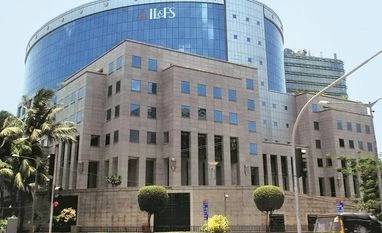
Risk management committees are supposed to define the risk appetite of an organisation and ensure that appropriate measures are taken to achieve a prudent balance between risk and reward in business. Though there is no regulatory diktat on the frequency of meetings, it’s extraordinary that the risk management committee of Infrastructure Leasing & Financial Services (IL&FS) did not find time to have even one meeting in the last two years, despite enough warning signals about the declining health of the infrastructure financing conglomerate.
IL&FS’ consolidated debt had climbed to over Rs 910 billion in 2017-18 and in its limited review report, the statutory auditor had drawn the board’s attention to the “existence of material uncertainty on the company’s ability to continue as a going concern” and the “management plan to raise funds”. Yet, the committee headed by Hemant Bhargava, managing director of Life Insurance Corporation, did not see any risk that calls for a discussion. The other members included veterans such as Arun K Saha, joint MD and CEO, R C Bhargava, chairman, Maruti Suzuki, and Michael Pinto, former shipping secretary.
The charges made by the ministry of corporate affairs before the National Company Law Tribunal (NCLT) against 10 former board members of IL&FS make astonishing reading, though it is not known why the nominee directors have been spared. The charges do not establish guilt, but they are a sad commentary on the way IL&FS was run by some of the most respected names in India Inc.
The petition makes all of them responsible for gross negligence and “putting a veil on their misleading intent” by hiding the severe mismatch between the company’s cash flows and payment obligations. The ministry has also accused the management of suppressing material information about the company’s financial solvency and its ability to meet its obligation. “The siphoning of funds has been systematically carried out by way of excessive withdrawal of remuneration and otherwise…,” the petition says. Some of these charges could get covered under the definition of fraud, under section 447 of the Companies Act, 2013.
What were the independent directors of the board doing? Former Sebi Chairman M Damodaran used to say that some people get on company boards and become permanent entities — more permanent than the furniture in the boardroom. In fact, one of the major weaknesses in Indian corporate governance has been provisions allowing the appointment of purportedly independent directors who are old friends or associates of management or of long-serving CEOs.
Quite a few independent directors in Indian companies are nominees of the chairman or the CEO and perform the role of the “nodders” in the PG Wodehouse short story of the same name (The Nodder). They nod whenever the chairman says anything. Directors so appointed want to be viewed by the controlling shareholders as flexible and cooperative rather than rigorous or principled.

 "Furniture in the boardroom")












 Connect with us on WhatsApp