Both consumers and builders were delighted with the reduction in the GST rates announced by the GST Council in a recent meeting. The reductions were quite impressive as the erstwhile rate of 12 per cent was brought down to 5 per cent and more importantly, the reduced rate of 8 per cent applicable to affordable homes was slashed to 1 per cent. There was expectedly a condition that the reduced rates would disentitle builders from taking input tax credit (ITC) on their purchases.
The condition that ITC cannot be availed of by builders has led to some predicting an increase in real estate prices, especially in the case of affordable homes, instead of the expected reduction. At this stage, it is necessary to understand that, even earlier, in case of restaurants, the rate reduction was accompanied by a condition that no ITC was permitted. However, in case of restaurants, a large portion of the inputs such as grains, vegetables, fruits and milk do not attract any GST and hence the loss of ITC is only on some expense items such as rent and franchise fees. In the real estate sector, a significant portion of the inputs such as steel, tiles, sanitary fittings etc. attract GST at 18 per cent and cement attracts 28 per cent. The denial of ITC would certainly have an impact on builders. We also need to understand that a large part of the project cost would be attributable to the cost of land (which does not attract GST), which in some large cities could be as high as 50 per cent of the total cost. Hence the impact of the ITC denial would vary across projects with estimates putting the quantum of ITC anywhere between 3 per cent and 8 per cent. There are reports that some states would like to have an option of continuing with the earlier higher rates with input tax credit.
There is also a need to consider the manner in which builders and home buyers would be taxed after April 1, when the new rates come into force. To finalise the transition provisions, a GST Council Meeting is scheduled for Tuesday, March 19. Home buyers, who have booked an apartment and have made part of the payment, would expect that the builders charge the lower rates of GST on invoices raised and payments made after April 1. Builders will have to grapple with challenges such as dealing with ITC on purchases of inputs made before that date where a large part of the inputs have already been used in the projects. For projects where effective construction is completed by March 31 but occupancy certificate (OC) is obtained after that date, there could be an ITC loss on instalments collected after April 1. A formulae to avail of ITC in case of under-construction projects could figure in the discussions of the GST Council tomorrow.
There has been a renewed focus on affordable homes, this time from a GST perspective, clearly in line with the government's plans of housing for all by 2023. The carpet area limits have been increased to 60 sq mt in case of metros and 90 sq mt for others, with a common value cap of Rs 45 lakh for all affordable housing projects. In these cases, while a rate of 1 per cent would be attractive for the buyer, the quantum of denial of ITC would determine whether there has been a significant dent to the builder and whether the builder would be compelled to marginally increase the price of the apartment, if permitted, to overcome the ITC loss.
It is necessary for builders to pass the benefits of the rate reductions to the home buyers in terms of the mandate of Section 171 of the CGST Act, 2017, and his failure to do so would bring him in the crosshairs of the National Anti Profiteering Authority (NAA). In earlier cases, the NAA has consistently refused to permit netting off expenditure increases against rate reductions and has reiterated the intention that the benefit of a tax rate reduction has to be passed on to the consumer, even if other costs have increased. These principles would now be tested if builders do not bring down prices commensurate with the rate reduction made, on the plea that ITC denial does not allow them to pass on the entire benefit.
The real estate sector has faced significant headwinds in the past few years in the form of RERA, demonetisation, working capital pressures etc. in addition to GST. While GST is one element in the overall picture, it is an important tool to revive an employment intensive sector like real estate and hence the Tuesday meeting of the GST Council, which is expected to finalise the transition provisions, will be keenly watched.
The author is partner, Deloitte India
Views expressed are personal

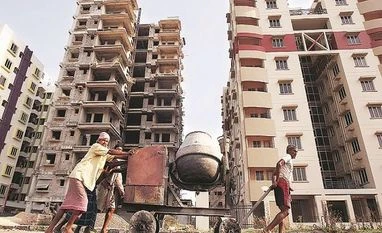 "GST on real estate: Transition is key")












 Connect with us on WhatsApp