The 2019 Assembly elections saw the Bharatiya Janata Party’s (BJP’s) resounding defeat to the Jharkhand Mukti Morcha (JMM) alliance with the Rashtriya Janata Dal (RJD), Congress, and other smaller parties. Raghubar Das, the incumbent BJP chief minister, couldn’t even win his own seat (Jamshedpur East) and lost to a former colleague, Saryu Roy, by more than 15,000 votes, not a small margin for an Assembly election. In the 81-seat Assembly, the JMM alone has 30 seats and the configuration of the legislature is such that even if the BJP wants, with just 25 seats it cannot engineer enough defections to form a government. This means that for only the second time in its history, Jharkhand will likely have a government that will continue its full five-year term.
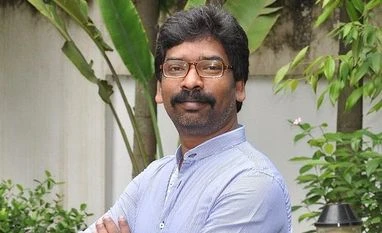
Against this background, some of the moves that Chief Minister Hemant Soren made recently are confusing. During the 2019 election campaign, he had promised 50 per cent reservation for women in government jobs. That is pending. Instead, the JMM alliance government pushed through a law last month, ensuring 75 per cent reservation in jobs in both government and the private sector for locals. The salary threshold is Rs 30,000 a month. “Outsiders” can be appointed to only 25 per cent vacancies at this income threshold and below. No one is shedding any tears because the private sector says they were filling these vacancies with locals anyway.
So is this an appeal to a new kind of identity politics by the JMM? And what is the reality about the growth of the BJP in Jharkhand that the JMM is beginning to worry about?
Jharkhand has a strong sense of identity. Earlier, the great unifying factor was the “foreigner” (diku), the non-tribal. Initially, Jharkhand tribals resisted efforts by the Mughal dynasty and the British to overcome their rich land and luxuriant forests. But the tribals were marginalised when the Hindu traders and Muslim farmers moved in and modern law and administration was established. British authority and its accompanying array of devices facilitated the process of pauperising them. The administration was manned by dikus and the introduction of paper currency was alien to the tribals. Their villages went to — principally Muslim — landlords, who wanted access to the forests and the communities that lived there as cheap labour.
Independent India offered little that was better. Missionaries stayed behind and the tribals continued to resist efforts to subvert their own variant of Hinduism and Gods — which were modelled on living tribal leaders. This led to the realisation that their lot would not improve until their identity was recognised as unique: For this they needed self-governance and their own province. The JMM was started in 1973 by a young man just out of his teens, Shibu Soren.
Till such time as there was a diku, the tribal identity was carved out in juxtaposition to it. But gradually, younger tribals realised it was more profitable to side with the diku than to oppose him. One fallout of this collaboration was Madhu Koda and the mining leases scandal.
But now there is another threat looming. And that is the BJP’s growing assertion in Jharkhand. The party might not have a credible face in the state to field as its leader. But the idea that you can be both a Hindu and a tribal is gaining traction.
With a division among the tribals, the JMM needs a more broadbased identity that responds to a persona that is neither Hindu, nor Muslim but Jharkhandi.
The controversy over the creation of a “namaz room” in the Jharkhand Assembly is part of that exercise. The government announced last month that a separate room would be allotted to Muslim MLAs so that they could say their prayers in that allotted space.
The move was not just about real estate. It was recognition of the fact that Muslims in Jharkhand, from being invaders, had become part of the state’s larger identity and needed to be treated as Jharkhandi, as Muslim, and the JMM alone could ensure their interests were protected.
The move predictably had the BJP up in arms as its party MLAs demanded that they be given a separate room to recite the Hanuman Chalisa. But it could have a cementing effect on Muslims. Right now, of the four Muslim MLAs in the Jharkhand Assembly, two are from the Congress and two are from the JMM. The Rajmahal Assembly seat, which has a sizeable Muslim population, saw the defeat of both Muslim candidates who divided community votes, enabling the BJP to win. Mr Soren and the JMM obviously worry that the same thing could happen in other places as well.
There are dangers in pandering to a Muslim identity alone — though the JMM is not above doing that. Recently, the government apologised publicly when the Muslim community protested at the inclusion in a textbook with a picture of the Prophet. Religious leaders said this was blasphemous. The chapter in the book was dropped immediately.
In the coming days, a new political refrain — Hindu, Muslim, or tribal, I am a proud Jharkhandi — can be expected from Ranchi. That is going to be Mr Soren’s formula for future politics.

 "Identity politics finds a fresh level")












 Connect with us on WhatsApp