Home / Opinion / Columns / Interim Budget 2019: Goodies from the poll vault
Interim Budget 2019: Goodies from the poll vault
Modi has delivered a masterstroke - it would be almost impossible for the Opposition to question any of the measures that BJP dished out in interim Budget 2019
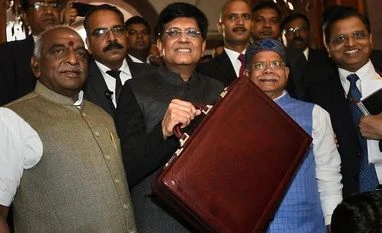
Finance Minister Piyush Goyal with MoS Finance ministers Shiv Pratap Shukla and P Radhakrishnan in the Parliament before presenting the interim aBudget 2019-20, in New Delhi | Photo: PTI
The Bharatiya Janata Party (BJP) chose the Lok Sabha on Friday to launch its election campaign. And one single visual on our television screens summed it up: As Interim Finance Minister Piyush Goyal announced the tax benefits for over 30 million middle-class tax payers, the House was reverberating with “Modi-Modi” slogan, and the prime minister was thumping his desk vigorously. As the camera zoomed in on Rahul Gandhi, the contrast was striking. For once in many months now, the Congress president was squirming and slouching in his chair and was wearing a blank look.
It is obvious Mr Modi has delivered a masterstroke. For, it would be almost impossible for the Opposition to question any of the measures that the ruling party dished out in the interim Budget. So all that the Congress could come up were sundry one-liners such as “it's an account for votes instead of vote-on-account”.
The game changer decision, which effectively blunts the weapon Mr Gandhi used last week in announcing income support for the poor is obviously the Rs 6,000 annual structured income support scheme for small and marginal farmers. While this means a payment of Rs 500 per month, which may not be much, the catch is that they would get Rs 2,000 before the Lok Sabha elections in May-June. This is not an inconsiderable amount. Who cares that tenant farmers have been left out of the process, as long as you have grabbed the headlines? Who cares that a more sensible move would have been to tackle the problem of surplus in agriculture by scrapping the Essential Commodities Act and Agriculture Produce Marketing Committee so that farmers get the right to sell crops to anyone they want at any time and anywhere?
The second winner would be the income tax rebate — people having income of Rs 6.5 lakh will not be required to pay any tax if they take full deduction of 80C on savings instruments like PPF, etc. Besides, standard deduction has been raised from Rs 40,000 to Rs 50,000 benefiting the salaried class. This isn’t much in real terms, but are readymade vote-catching slogans for the party. Other taxpayers have also been given some crumbs – such as no tax on notional rent on second house.
Workers in the unorganised sector get entry into a new pension scheme under which anyone who contributes Rs 100 per month will get a matching contribution of Rs 100 from the government.
These are proposals which no future government will be able to overturn.
There are, however, many questions that remain unanswered. For example, isn’t the BJP passing on a huge burden to future governments via the pension scheme? Some of the revenue assumptions are also difficult to understand – what explains the government’s optimism that the collections from the goods and services tax will go up by 20 per cent in 2019-20, considering the current year’s growth figures are just about 6 per cent.
Rating agencies will also closely follow the failure to stick to the fiscal glide path. While this year’s deviation is marginal, the government has fixed a fiscal deficit target of 3.4 per cent in the next fiscal year. This shows all the talk about fiscal prudence is just that – mere talk. There is no shortage of excuses – if it was GST last year, it’s distressed farmers this year! There were no new policies to increase revenues, while a number of expenditure measures were announced that will increase outlays and put pressure on the government’s ability to meet its fiscal deficit target further. As Moody’s says, increased fiscal outlays as a result of the introduction of the direct income support scheme for farmers and subsidised agriculture loans are likely to boost the rural economy through consumption in the near term, but that will have a fiscal cost.
But all these concerns can wait. It’s election time, folks!
Disclaimer: These are personal views of the writer. They do not necessarily reflect the opinion of www.business-standard.com or the Business Standard newspaper

 "Interim Budget 2019: Goodies from the poll vault")


 Connect with us on WhatsApp