Now what?

Once the lockdown is lifted, we will need the mother of all fiscal and monetary policy support to sustain the economy
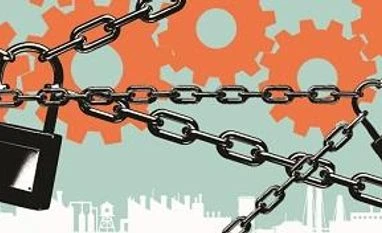
illustration
Illustration: Ajay Mohanty
Akash Prakash
6 min read Last Updated : Mar 30 2020 | 11:20 PM IST
Given the total shutdown across the world, with most major economies imposing some form of lockdown, the obvious question on the minds of investors is, how long will this lockdown continue, and at what cost?

The Covid-19 disease has extracted a huge price from the global economy. We are at over 600,000 cases and 30,000 deaths. The disease continues to spread quickly, with cases doubling in many jurisdictions every three days. The world is going into a recession, and most indicators show far steeper falls in economic activity than even during the global financial crisis. Many commentators expect a 25 per cent decline in US gross domestic product (GDP) quarter-on-quarter, with similar declines in most of Europe. Most countries will have negative growth for the year. I have never seen economic data fall as steeply as observed in China, and soon to be seen globally. Everything is just falling off a cliff, led by the services sector. To illustrate, the US weekly initial unemployment claims at over 3 million were five times the previous peak.

The economic toll of the lockdowns is immense. The question now shifts to how long will they need to be in place? Having reacted too late to the spread of the virus, most countries had to put in place lockdowns to ensure they stop the disease in its tracks. Had countries reacted earlier with more extensive testing and contact tracing, like Taiwan or Singapore, then such extensive lockdowns may not have been necessary.

Illustration: Ajay Mohanty

 
The theory here is clear. We need to bring the R (reproductive rate), or the number of people infected by someone who has the virus, down to below 1. If R is above 1, the virus will continue to proliferate; below 1, the virus will slowly decrease. The estimated R of Covid-19 is between 2 and 3. The entire objective of the lockdown is to bring R to below 1. Once this is accomplished, the strict lockdown can be relaxed, as long as we can ensure that R stays below 1, and more relaxed policies can be put in place. With this approach, the disease is not eliminated, but the number of cases remain stable and we avoid any sudden spikes, which could overwhelm health systems —the nightmare scenario every country is trying to avoid. The lighter control measures must remain in place till we get a vaccine, effective medication becomes available or till we achieve herd immunity so as to ensure any new local outbreak can be nipped in the bud. For a vaccine, we will need at the minimum 12-15 months.

 The policy path is thus clear. Impose severe social controls and lockdowns, till such time as we can bring R to below 1. Then follow it up with a set of lighter controls, no large functions, some travel restrictions, targeted social distancing (for the old), strict testing and contact tracing, all designed to keep infections under control and give scientists time for the development of a vaccine or new medication. This way we are effectively buying time, with the least economic cost.

The good news is that strict social controls and lockdowns have proven to be effective in reducing the spread of the disease quickly. The impact of China’s January 23 lockdown was visible within five days. China was able to flatten the infection curve, ex-Hubei province, within two weeks and in Hubei itself in a month. Even in Italy, the lockdown has now visibly slowed the spread of new infections.

Thus, for any country that is able to strictly enforce social distancing and a lockdown, within a month the infection curve should flatten and the R drop to below 1. The bad news, however, is that controls won’t just disappear. Lighter controls will have to remain in place for up to a year. The economic damage of lighter controls is as worrisome as a full lockdown. Controls, even limited ones, impact consumer confidence and consumption. Even today in China, despite most of the lockdown measures now being lifted, and very few new cases, manufacturing activity is just about 80 per cent of the normal level and the service sectors far weaker. Theatres, malls, travel and restaurants are still running at less than 50 per cent of before-crisis activity levels. This despite more than two months having passed since the lockdown began.

This is going to be a long haul. There will be substantial damage to the economy, especially the services sector. This will not be over in three weeks. There will be savage and unprecedented cuts to corporate profits. Consolidation will accelerate across sectors. Strong balance sheets will be a competitive advantage. Larger companies will gain share. There will be substantial bankruptcies and layoffs, especially among the small and medium enterprises sector. Banks will have to brace for a surge in non-performing assets. Given the risk-aversion already visible among banks, over the last 24 months, the regulatory authorities have to ensure we do not see a credit freeze for everyone except AAA borrowers. Risk aversion will rise across the economy. It will be impossible to forecast FY21 profits, and it will be a lost year for most companies. Most corporations, across the world, will go into cash conservation mode, with all capex plans and discretionary spend on hold.

In such a risk-averse environment, the quality premium will sustain, no investor will tolerate governance issues or balance sheet stress.

The path ahead remains uncertain, but the central case for India and other economies must be a very sharp contraction in economic activity for the coming few weeks as the lockdown bites, followed by a slow recovery as we transition out of the lockdown to less strict social distancing. The willingness of governments to be bold and assertive in economic policy will be tested. 

We will need the mother of all fiscal and monetary policy support to sustain the economy. Investors will back those countries and markets where the authorities step up. While the Reserve Bank of India has delivered, the fiscal response seems too timid. This is not the time to worry incessantly about the fiscal deficit. In an environment where other countries are delivering fiscal support of 10 per cent of GDP, our response at only 0.5 per cent of GDP (genuine new spending) seems too modest. Given the extent and importance of small and medium business to growth and employment in India, our dependence on services and the lack of a social safety net, we are uniquely vulnerable. The government has to be bolder.

The writer is with Amansa Capital

One subscription. Two world-class reads.

Already subscribed? Log in

Subscribe to read the full story →
*Subscribe to Business Standard digital and get complimentary access to The New York Times

Smart Quarterly

₹900

3 Months

₹300/Month

SAVE 25%

Smart Essential

₹2,700

1 Year

₹225/Month

SAVE 46%
*Complimentary New York Times access for the 2nd year will be given after 12 months

Super Saver

₹3,900

2 Years

₹162/Month

Subscribe

Renews automatically, cancel anytime

Here’s what’s included in our digital subscription plans

Exclusive premium stories online

  • Over 30 premium stories daily, handpicked by our editors

Complimentary Access to The New York Times

  • News, Games, Cooking, Audio, Wirecutter & The Athletic

Business Standard Epaper

  • Digital replica of our daily newspaper — with options to read, save, and share

Curated Newsletters

  • Insights on markets, finance, politics, tech, and more delivered to your inbox

Market Analysis & Investment Insights

  • In-depth market analysis & insights with access to The Smart Investor

Archives

  • Repository of articles and publications dating back to 1997

Ad-free Reading

  • Uninterrupted reading experience with no advertisements

Seamless Access Across All Devices

  • Access Business Standard across devices — mobile, tablet, or PC, via web or app

More From This Section

Disclaimer: These are personal views of the writer. They do not necessarily reflect the opinion of www.business-standard.com or the Business Standard newspaper

Topics :CoronavirusFiscal PolicyLockdownGross Domestic Product (GDP)Reserve Bank of IndiaManufacturing activityGross domestic productmonetary policy committee

Next Story



