Protect the Aravalli range

Thar desert can creep towards the east
Aravalli, Rajasthan, desertification,
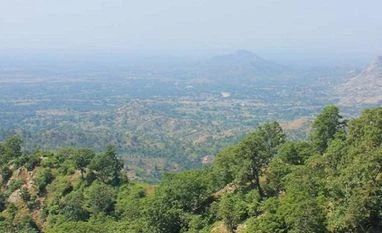
In the distance, the start of the Thar desert; and closer, the forestland in the Aravallis range in Gogunda block in Udaipur district, southern Rajasthan | Credits: Vaishnavi Rathore
Business Standard Editorial Comment
3 min read Last Updated : Jan 05 2022 | 11:36 PM IST
The unabated destruction and degradation of the Aravalli range of mountains have ominous consequences which go beyond the adjoining Thar desert. It is posing a grave threat to the ecology of the agriculturally vital north-western states. Particularly at risk is the environment of the National Capital Region of Delhi (NCR), which is already fighting a losing battle against air pollution. More worryingly, a recent desertification-related study undertaken by the Central University of Rajasthan has indicated that this menace is set to exacerbate due to climate change. The fear is that the desert would creep towards the east, causing aridity in the fertile plains. Dusty winds from the desert are already raising the PM10 content of the NCR’s air, worsening pollution in Delhi.

The Aravalli range of hills, spanning some 700 km in the four north-western states — Delhi, Haryana, Rajasthan, and Gujarat — has characteristically served as the green wall, or a natural fence, between the desert and adjoining fertile plains. The factors like increasing population pressure, changes in rainfall pattern, spreading sand dunes, and flawed plantation drives are contributing to the disintegration of the Aravallis, undermining its capacity to thwart the spread of the desert. The maximum, largely irreversible, damage to these hills has been caused by the unchecked quarrying and illegal felling of trees to clear land for the construction of farm houses and residential colonies. It has also adversely affected the rich biodiversity of the Aravallis comprising a large variety of plants, animals, and birds.

Shockingly, the Forest Survey of India has found that more than 30 hills in the Rajasthan segment of this mountainous range have vanished due to the flattening of land by the mining mafia. The hills situated in the Haryana portion of the Aravallis are also in bad shape. The over-exploitation of resources and reckless urbanisation have led to the thinning of the vegetative cover, creating large openings for the sand-loaded winds to cross over to Delhi and nearby areas, aggravating urban pollution in the region. Though none of the governments of the four north-western states is unaware of the looming danger from the unrestrained denudation of the Aravallis, little is being done to halt, let alone reverse, this menace. What is worse, there is hardly any hope of result-oriented action on this front even in the near future. This is evident from the way the issue of the Aravallis’ upkeep has been sought to be downplayed in the draft NCR Regional Plan 2041.

It redefines the natural conservation zone, keeping most part of the Aravallis out of it. Earlier, this conservation zone covered the entire Aravalli range, including its forests, water bodies, and groundwater recharge areas. Construction activity was allowed on no more than 0.5 per cent of the area and that too for creating regional parks and sanctuaries after prior approval from the Centre. Construction for commercial, residential, tourism, and real estate purposes was strictly barred. All these curbs will virtually be lifted if the Regional Plan 2041 is adopted and enforced in its present shape. This plan, therefore, needs to be revisited and suitably modified to include the entire Aravalli range in the natural conservation zone. A better bet would, no doubt, be to prepare a separate plan for rejuvenating the Aravallis to allow it to play its inherent role as the Thar desert’s outer barrier. 

One subscription. Two world-class reads.

Already subscribed? Log in

Subscribe to read the full story →
*Subscribe to Business Standard digital and get complimentary access to The New York Times

Smart Quarterly

₹900

3 Months

₹300/Month

SAVE 25%

Smart Essential

₹2,700

1 Year

₹225/Month

SAVE 46%
*Complimentary New York Times access for the 2nd year will be given after 12 months

Super Saver

₹3,900

2 Years

₹162/Month

Subscribe

Renews automatically, cancel anytime

Here’s what’s included in our digital subscription plans

Exclusive premium stories online

  • Over 30 premium stories daily, handpicked by our editors

Complimentary Access to The New York Times

  • News, Games, Cooking, Audio, Wirecutter & The Athletic

Business Standard Epaper

  • Digital replica of our daily newspaper — with options to read, save, and share

Curated Newsletters

  • Insights on markets, finance, politics, tech, and more delivered to your inbox

Market Analysis & Investment Insights

  • In-depth market analysis & insights with access to The Smart Investor

Archives

  • Repository of articles and publications dating back to 1997

Ad-free Reading

  • Uninterrupted reading experience with no advertisements

Seamless Access Across All Devices

  • Access Business Standard across devices — mobile, tablet, or PC, via web or app

Topics :Aravalliair pollutionIndia’s forests

Next Story



