Public research for public opinion

I believe, public science will survive the assault of industry. It must, writes Sunita Narain
Public research for public opinion
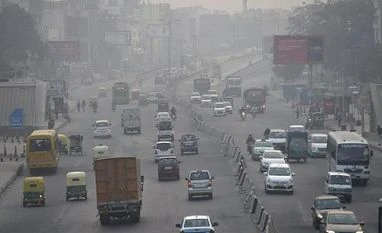
delhi air pollution
Sunita Narain
Last Updated : Dec 17 2018 | 1:24 AM IST
How not to allow inconvenient public research: This has to be a case study that all corporates are taught in business schools. Why do I say this? Because there is a pattern that corporate India follows when it comes to ensuring that such research is besmirched to the point that scientists, who in any case are resistant to join discordant discourses, are pushed to the point to even greater reticence and retirement. 

We saw this when it came to pesticide contamination in our food. First, when the issue of pesticide toxicity broke, it was government scientists, weaned on the idea of using pesticides for growth, who came to the assistance of the beleaguered pesticide industry. Then when scientists broke ranks to do research on the toxicity of pesticides and their link with human health, industry went ballistic. Their strategy was always to ensure that they targeted each researcher individually; they attacked the science and then invariably went after the individual. 

This was the case with government scientists working on endosulfan poisoning in Kerala’s Kasaragod district — government scientists who dared to do research on the health impacts of pesticide usage in cotton fields of Andhra Pradesh or Maharashtra and those who started to investigate other such cases. The actions from industry were always quick and nasty and sadly effective. This is why, in the past few years, there is little research on pesticide toxicity — no Indian government scientist will take on this task as it would invite retaliation.

But why am I writing this now? Because the same strategy is at play to ensure inconvenient research on the sources of air pollution is besmirched and killed. 

The Ministry of Earth Sciences (MoES) published a recent report on the sources of air pollution in Delhi. From the date the report was published, the Society for Indian Automobile Manufacturers (SIAM) has been hammering away at it — disputing facts and challenging its conclusions. When questions on the technical issues raised in the report were answered, it has continued to lobby against the report. Why? Why should this scientific report raise the hackles of SIAM? Why this virulent campaign?

Because this report is inconvenient. It establishes that vehicles contribute 40 per cent of the pollution load in Delhi — roughly half the PM2.5, more than 60 per cent of the NOx emissions and over 80 per cent of the carbon monoxide load. All this means that action to combat air pollution must drive changes in the fuel and technology of commercial and light-duty vehicles and must target the numbers so that we can move, but without more individual vehicles. 

So, what does SIAM want? It wants the government to back down and take this research off its website. But this is not all. It also has its pet research, for which it wants credence. This research has been supported by another government ministry, the Department of Heavy Industry, and has been done by the Automotive Research Association of India (ARAI) and The Energy and Resources Institute (TERI). This study “establishes” that vehicles contribute only 15-23 per cent of the PM2.5 load in the city. Even less when you take into account PM10. It is dust that is the bigger problem — adding up to 42 per cent of the pollution load.

Even if you put aside the obvious conflict of interest of the ministry that is in charge of promoting the vehicle industry or of the automotive research association, which is directly funded by vehicle manufacturers, the fact is that comparing the two studies is completely erroneous. The MoES study is an emission inventory, which looks at the pollution load from different sources. And the ARAI-TERI study is source apportionment, which takes the particulates and fingerprints, or tracks, back to the sources. Apples and oranges, scientifically speaking. 

This, when we know that given the sheer scale and toxicity of the air we are breathing, we need to address all sources of pollution — vehicles, industry and dust. But industry needs to be in the clear — somebody else is responsible. Not us. We are a small part of the problem, they say. The ARAI-TERI study helped them establish this. Now, they do not want the apple-cart rocked. 

So, they have no worry about the fallout of this attack. They are going all out — even requisitioning the services of eminent scientists in questioning the results. It is inconvenient. It is wrong. I say this with some confidence that the same vehicle industry cannot anymore argue that air pollution is not toxic or that diesel emissions are not likely carcinogenic. This is what they tried hard to “establish” through their science for the past some years. So, I believe, public science will survive the assault of industry. It must. 
The writer is at the Centre for Science and Environment
sunita@cseindia.org
Twitter: @sunitanar

One subscription. Two world-class reads.

Already subscribed? Log in

Subscribe to read the full story →
*Subscribe to Business Standard digital and get complimentary access to The New York Times

Smart Quarterly

₹900

3 Months

₹300/Month

SAVE 25%

Smart Essential

₹2,700

1 Year

₹225/Month

SAVE 46%
*Complimentary New York Times access for the 2nd year will be given after 12 months

Super Saver

₹3,900

2 Years

₹162/Month

Subscribe

Renews automatically, cancel anytime

Here’s what’s included in our digital subscription plans

Exclusive premium stories online

  • Over 30 premium stories daily, handpicked by our editors

Complimentary Access to The New York Times

  • News, Games, Cooking, Audio, Wirecutter & The Athletic

Business Standard Epaper

  • Digital replica of our daily newspaper — with options to read, save, and share

Curated Newsletters

  • Insights on markets, finance, politics, tech, and more delivered to your inbox

Market Analysis & Investment Insights

  • In-depth market analysis & insights with access to The Smart Investor

Archives

  • Repository of articles and publications dating back to 1997

Ad-free Reading

  • Uninterrupted reading experience with no advertisements

Seamless Access Across All Devices

  • Access Business Standard across devices — mobile, tablet, or PC, via web or app

More From This Section

Disclaimer: These are personal views of the writer. They do not necessarily reflect the opinion of www.business-standard.com or the Business Standard newspaper
Next Story



