Succession blues: YES Bank's board failed in its responsibilities

The board has a nomination and remuneration committee, comprising three independent directors; should it not have raised the issue of succession planning some years ago?
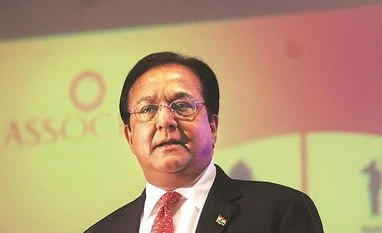
Rana Kapoor
Rana Kapoor
Business Standard Editorial Comment
Last Updated : Sep 27 2018 | 8:49 AM IST
The Indian corporate and banking system appears to offer serial examples of boards failing in their responsibilities to stakeholders. The Yes Bank board’s request to the Reserve Bank of India (RBI) to grant an extension of eight months to Managing Director and CEO Rana Kapoor, presents yet another. The board said it will first seek an extension for Mr Kapoor till April 30 for finalisation of financial statements, and thereafter a further extension till September 30 for completing the annual general meeting process. Last week, the banking regulator had stipulated that Mr Kapoor would have to step down in January 2019, instead of the three-year term that the board had originally requested when his term expired in August this year. But the board said the extension was necessary on account of Mr Kapoor’s “role in the bank since inception” and “the time-consuming challenges of finding a new successor”.

This is an extraordinary admission. The board has a nomination and remuneration committee, comprising three independent directors; should it not have raised the issue of succession planning some years ago? The fact that the bank has suddenly appointed two executive directors suggests that this basic requirement has not been a priority until now. Although it is true that Mr Kapoor, 61, was readying for a fresh three-year-term that would have ended in 2021 until the RBI cut it short, he has helmed the bank for 15 years. Such a long tenure warranted a successor to have been identified and groomed some years ago. It is also astonishing that the board thinks it will take a year to identify a successor. Axis Bank, which was in a similar predicament when the RBI cut short the term of CEO Shikha Sharma, had little trouble identifying within weeks of RBI’s stricture, and grooming him till she steps down at the end of December. The RBI hasn’t made public its reason for denying an extension to Mr Kapoor, who owns 10.67 per cent of the bank’s shares together with his family, but the bank had disclosed in May last year that there was a divergence of over Rs 40 billion in the non-performing assets (NPAs) reported by it and the same assessed by the regulator for 2015-16. The same was also seen in the case of net NPAs, with a divergence of over Rs 33.18 billion, the bank said in its annual report.

In the interest of containing the larger systemic risk that is lurking in the banking system, it would be appropriate for the RBI’s actions with respect to Axis Bank and YES Bank to be extended to public sector bank chiefs, who are insulated from such personal risk by virtues of government ownership. Yet, these banks have played by far the bigger role in the expanding bad loans crisis that is playing out in the economy right now, and CEOs from some of the country’s largest banks have been no less derelict in their duty to staunch the problem. Given that State-owned banks dominate lending activity, it seems only fair that their top management should be subject to the same regulatory strictures as their private sector counterparts.

Disclosure: Kotak Mahindra and associates are significant shareholders in Business Standard Pvt Ltd.

One subscription. Two world-class reads.

Already subscribed? Log in

Subscribe to read the full story →
*Subscribe to Business Standard digital and get complimentary access to The New York Times

Smart Quarterly

₹900

3 Months

₹300/Month

SAVE 25%

Smart Essential

₹2,700

1 Year

₹225/Month

SAVE 46%
*Complimentary New York Times access for the 2nd year will be given after 12 months

Super Saver

₹3,900

2 Years

₹162/Month

Subscribe

Renews automatically, cancel anytime

Here’s what’s included in our digital subscription plans

Exclusive premium stories online

  • Over 30 premium stories daily, handpicked by our editors

Complimentary Access to The New York Times

  • News, Games, Cooking, Audio, Wirecutter & The Athletic

Business Standard Epaper

  • Digital replica of our daily newspaper — with options to read, save, and share

Curated Newsletters

  • Insights on markets, finance, politics, tech, and more delivered to your inbox

Market Analysis & Investment Insights

  • In-depth market analysis & insights with access to The Smart Investor

Archives

  • Repository of articles and publications dating back to 1997

Ad-free Reading

  • Uninterrupted reading experience with no advertisements

Seamless Access Across All Devices

  • Access Business Standard across devices — mobile, tablet, or PC, via web or app

Next Story



