Why honey? Why bees? Because this army of nature is crucial for the productivity of our food system and the honey they make works for our well-being and health. This much we know. But what we ignore is just how quickly we can lose this gift of nature.
Since the release of our investigation into the adulteration of honey, we have received textbook responses — possibly what is discussed and taught in business schools across the world. The first step is to deny; in this case, honey-processing companies are crying foul, saying we have it wrong. Step two is to discredit us with slander, and hope something sticks; then to use scientific jugglery to confuse consumers. In this case, companies are putting out erroneous test reports and innuendoes about our tests being inaccurate. The third step in the textbook is to spend big time on building an alternative narrative that their products are clean and safe, and, in this, use “good science” to convolute things.
The fourth line of attack is more nuanced — it has evolved since the cola wars. Now, companies do not file cases against us directly; they threaten, they intimidate, but they do not take us to court. Instead, they work from within — use their muscle power in the corridors that matter — to work up an attack.
But this has not worked in the past, and we believe it will not work this time either. In the case of the colas, the joint parliamentary committee (JPC), set up to investigate us (the whistle-blower) and not the company, ruled in our favour. We believe that this time around, the government, including the Food Safety and Standards Authority of India (FSSAI), will — based on our reports and the need to ensure the safety of this health food — ensure that action is taken to stop this adulteration. There is too much at stake here. We all know this.
Then of course there is the question of the food production system. Our investigation started because the price of raw honey had crashed, and this at a time when honey consumption has increased manifold. Beekeepers are losing business and closing shop. This should worry us as their livelihood is linked to our food.
But that’s not all. The fact is modern beekeeping — an industrial-scale activity — also needs to be discussed. First, there is the issue of biodiversity of bees. The European Union (EU) — a champion of biodiversity conservation in the world — defines its honey as produced by Apis mellifera. In other words, no other bee can produce the honey that is sold as honey in the EU. What then does this do to the biodiversity of bees? In India, we have Apiscerana (Indian honeybee) or Apisdorsata (rock bee). If the honey of these cannot be harvested, if these species are not encouraged, and, do not thrive, what then?

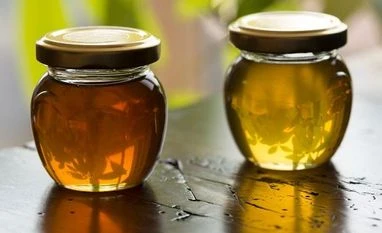 "The nature of food")












 Connect with us on WhatsApp