Last week, the American government served a 60-day notice for withdrawing of tariff concessions on products originating from India under the Generalized System of Preferences (GSP).
The government here has downplayed the possible impact on our overall export. However, the significance is not the extent of damage but that punitive action has been taken.
According to latest World Trade Organization (WTO) data, India’s average bound tariff rate was 48.5 per cent; its ‘Most Favoured Nation’ average applied tariff was 13.4 per cent. India has kept high its tariffs on automobiles and motorcycles (60-75 per cent), alcoholic beverages (150 per cent) and textiles (some rates exceed 300 per cent). Quite a few of India’s industrial tariffs remain unbound at the WTO. India is also the highest user of anti-dumping and safeguard measures, when measured against its total import. The US President, Donald Trump, had publicly attacked India and called it a “tariff king”.
The Agreement on Subsidies and Countervailing Measures (ASCM) at the WTO envisages the phasing out of export subsidies. India is not considered a developing country now, having breached $1,000 in per capita income in 2015 for three years in a row. The existing export promotion schemes needed to be replaced with WTO-compatible ones. India has done nothing of the sort and, so, the US has filed a complaint at WTO and got the support of the European Union and several other countries.
India brought in new rules on e-commerce that restrict the way Amazon and Walmart do business here. These followed rules to force global credit card payments companies such as Mastercard and Visa to move their data to India; also, imposition of higher tariffs on electronic products and smartphones. The US has also raised issues regarding intellectual property protection in India.
The latest disputes or negotiations regarding market access for US medical devices and products of dairy industries, various agricultural and animal husbandry products, relaxation or easing of procedures related to issues like telecom testing or conformity assessment, and tariff reduction on electronic, telecommunication and information technology products are only some of the many issues that have agitated the US.
On its part, India is aggrieved that the US had hiked tariffs on its steel and aluminium import. Last June, The government announced retaliatory action but had extended the deadlines repeatedly, to give negotiations a chance to address our trade issues with the US.
Lower tariffs under GSP are given to developing countries on a non-reciprocal basis — the recipients are not required to give any benefits to the US in return. However, the US says it can withhold GSP benefits to any trading partner on finding that its own export faces market access hurdles in the latter country.
Thus, bilateral trade ties have been strained for some time but no tangible action was taken by either side. The US has now decided not to be restrained any more. So, unless some settlement comes through in the next few days, withdrawal of GSP benefits will kick off. That might encourage more countries to follow suit.
Given that only $5.6 billion of India’s annual export will be affected, and the amount of concessional duty at issue is only $190 million, it is easy to dismiss the developments as being no serous consequence. However, new gates have opened and that should worry exporters and policy makers.
E-mail: tncrajagopalan@gmail.com

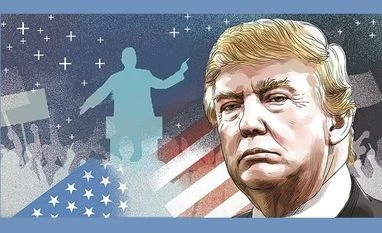 "Trump's action cause for worry")












 Connect with us on WhatsApp