Visa politics

New H1-B ban would also hurt US companies
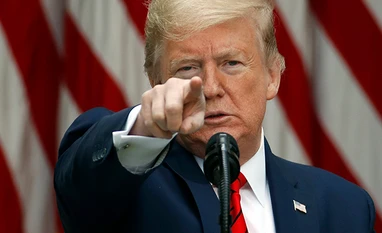
Donald Trump
Donald Trump speaks about the coronavirus during a press briefing in the Rose Garden of the White House. Photo: PTI
Business Standard Editorial Comment
3 min read Last Updated : Jun 24 2020 | 10:41 AM IST
Returning to a frequent theme of his politics, his campaigns, and his governance, US President Donald Trump announced on Monday that the country would not permit granting new temporary work visas for the remainder of the year. Besides the well-known H1-B visa, this would include certain work-related J (exchange visitor) and L (inter-company transfer) visas. The White House proclamation to this effect made a case that this was necessary to deal with the fallout of the pandemic, which has strained the US labour market. However, the broader rhetoric around the announcement suggested that — certainly if Mr Trump is re-elected — there would be an attempt to redesign the US immigration system around prioritising the highest-paid workers. In fact, there may be such a move even if Mr Trump himself is not president after January 2021 — the White House repeated polling data, suggesting such immigration restriction moves were broadly popular with the electorate. 

Indians are the biggest beneficiaries of the H1-B visa programme, with two-thirds of the work permits going to them. The Indian companies most affected by a restriction on immigration are the big information technology-enabled services companies such as Infosys and Tata Consultancy Services (TCS). But the markets were broadly sanguine about these stocks. The Nifty IT index was in fact up 1.5 per cent in Tuesday’s trading. All but one of the index’s component stocks were in the green — and that one, Hexaware Technologies, may be seeing its prices respond to its board’s decision to de-list over the weekend. The markets’ confidence is easy to comprehend. The restriction on new visas could not have come at a better time. This is hardly the moment at which possible clients would be undertaking discretionary spending of the sort that would cause the ITeS majors to have to hire large numbers of new people.

Further, the companies have worked with varying degrees of success on localising their workforce in the US. TCS may not have done as well at this as the others. Yet, although the details are hard to come by, it seems likely that over half the US employees of Infosys, Wipro, and HCL are local. The proportion among the new hires will be, of course, even higher. There is therefore a certain insulation for these companies from the visa restrictions. Finally, work-from-home restrictions during the pandemic have in any case rendered on-site activity less relevant. The question, however, is whether the ITeS companies will complete their promised shifts in business models in time if there is indeed an overall restructuring of the US migration system. Unquestionably, there will be pressure on margins. There is likely to be some very visible heterogeneity in the sector in the medium term.

The US, however, should be less sanguine. The chief executive officers of multiple US tech giants, including of Google and Microsoft, have made it clear that they see this as short-sighted. This is not surprising. Amazon, for example, secured more work permits than the top six Indian IT services firms combined last year. Replacing the current system with one that privileges the highest-paid employees may not be the best for the US itself. Entrepreneurship of the sort that created Silicon Valley did not emerge from the highest-paid employees, after all. The US’ global edge continues to come from its ability to out-innovate the rest of the world. Indian ITeS may shrug off Mr Trump’s executive order; the US’ unique incubatory environment, not so much.

One subscription. Two world-class reads.

Already subscribed? Log in

Subscribe to read the full story →
*Subscribe to Business Standard digital and get complimentary access to The New York Times

Smart Quarterly

₹900

3 Months

₹300/Month

SAVE 25%

Smart Essential

₹2,700

1 Year

₹225/Month

SAVE 46%
*Complimentary New York Times access for the 2nd year will be given after 12 months

Super Saver

₹3,900

2 Years

₹162/Month

Subscribe

Renews automatically, cancel anytime

Here’s what’s included in our digital subscription plans

Exclusive premium stories online

  • Over 30 premium stories daily, handpicked by our editors

Complimentary Access to The New York Times

  • News, Games, Cooking, Audio, Wirecutter & The Athletic

Business Standard Epaper

  • Digital replica of our daily newspaper — with options to read, save, and share

Curated Newsletters

  • Insights on markets, finance, politics, tech, and more delivered to your inbox

Market Analysis & Investment Insights

  • In-depth market analysis & insights with access to The Smart Investor

Archives

  • Repository of articles and publications dating back to 1997

Ad-free Reading

  • Uninterrupted reading experience with no advertisements

Seamless Access Across All Devices

  • Access Business Standard across devices — mobile, tablet, or PC, via web or app

Topics :H1B VisaUS companiesUS citizenshipTata Consultancy Services TCSDonald TrumpWipro

Next Story



